Dec 30, 2025
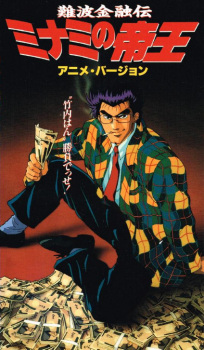
Before I begin this review, it's worth noting that I am the first to review this title on MAL, and even the first to give it a score at all. It is my belief that every anime deserves at least one proper review, deserves to have its content engaged and reckoned with. No matter how obscure it is, and no matter how long ago it was made, an anime still represents the creative passion of its creators, the hopes and dreams of the team that made it, and as such, I will give this one a fair and honest accounting here. Naniwa Kinyuu Den: Minami
...
no Teiou, which roughly translates to Naniwa Financial Tale: King of Minami, is an archetypal yakuza crime drama that changes the standard formula in several interesting ways, resulting in an end product that stands out from the crowd of similar titles that were produced throughout the 80s and 90s. Releasing in 1993, this anime follows the exploits of feared loan shark, Ginjirou Manda, and those whose lives he impacts, be it a young and ambitious criminal aspirant, or an old-fashioned yakuza bruiser who lives and dies for the sake of honor. Now, I'm not really a huge fan of the yakuza crime drama genre in the first place, but this is one of the better ones I've watched, largely due to its more unorthodox approach, overall comedic theming, and the likability of its main cast. The story unfolds in such unusual ways, following the power of money instead of the power of muscle or status, and actually goes into a fair bit of detail in regards to how Ginjirou and his rivals operate. Episode 2 was my favorite in particular, mostly due to its genuinely fascinating and unusual storyline centered around so-called "professional liquidators", and the complicated game of cat-and-mouse that is sometimes played during bankruptcy proceedings. It is actually quite educational in a bizarre way, and the fight between Ginjirou as "the ultimate creditor" and the liquidators as "the ultimate debtors" makes even such a bureaucratic and byzantine process as asset forfeiture and bankruptcy proceedings feel dramatic and exciting, which is a real strength, and is why the story is this anime's strongest aspect.
The art plays into its overall aesthetic, with that characteristically hand-drawn look, though I have to say it starts off kind of rough, even if it does really pick up later on, which is also part of why I prefer episode 2. Visually, this title feels much more like an 80s anime than a 90s one. I also believe that this anime is improved by watching it either on a CRT TV or through a CRT filter. Given that this anime was produced with that kind of display in mind, you can really see the colors pop and the depth of field get more pronounced with a CRT filter, enhancing the total experience.
The sound is good, with vocals and music that meet the basic standards of quality for the time, with the VA for Ginjirou fitting his character particularly well.
The characters all fill their roles well, especially Ginjirou, whose witty bravado and cheapskate attitude make him a funny and compelling antihero to root for against the seedy figures of the yakuza criminal underworld. Overall, this anime stands on its own as a really good example of the yakuza crime genre, and excels by setting itself apart from its peers in a variety of unexpected ways. It's a solid watch, and if I were the target audience, or if it had more time to develop the story, I probably would have enjoyed it even more.
Reviewer’s Rating: 6
What did you think of this review?
Nice
 0
0
Love it
 0
0
Funny
 0
0
Confusing
 0
0
Well-written
 0
0
Creative
 0
0Show all







.png)