Japanese: イージーフィルム
Established: Jul, 1988
Dissolved: 2003
Member Favorites: 11
E&G Films, sometimes incorrectly addressed as Easy Film, was originally established as E&G World in 1971 and became incorporated in July, 1988 when it was merged with another small animation production studio, Lucky More, and thereafter renamed into E&G Films. Its headquarters was located in Musashino, Tokyo at that time and Hagiwara Kouji was the studio's representative director.
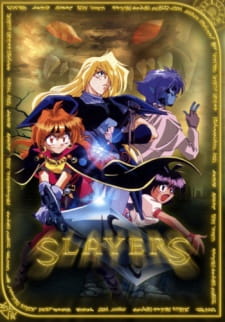
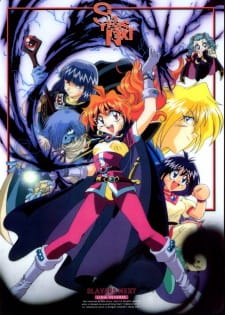
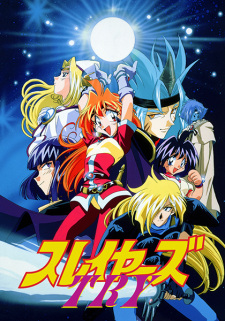
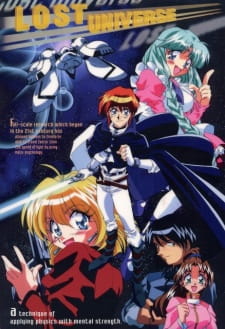
However, the media mix projects they worked on and developed together with Kadokawa Shoten and King Records, were of low budget and not profitable. The studio was forced to outsource much of its works to foreign subcontracting studios to get them done, in turn often struggling with schedules. The low point was reached with the production of the Slayers spin-off Lost Universe, which was not ready yet when it was due to air, and missing content had to be replaced by apology screens. Furthermore the fourth episode Yashigani Hofuru (ヤシガニ屠る), lit. feasting on Coconut crab, which aired on April 24, 1998, was initially worked on by a South Korean animation company, San Ho Studio. They only were given basic manuals of the characters. The result was so dismal in quality that it was later reworked for the LaserDisc releases. An anime with extremely poor animation came to be called a Yashigani thereafter.
This incident led to problems in the management and lost trust from TV stations. The studio had to concentrate on subcontracting work for other productions and to reschedule their own productions on the upcoming AT-X and small anime only satellite channel CS. All measures which did not get rid of the studio's financial problems by that time though. Its last original project came to be Muteki Ou Tri-Zenon, a series greatly overlooked by the audience. Following several other low budget adaptations, the studio had finally to shut down because of bankruptcy. Thus finally ending a half-decade long period of low budget and quality lacking shows, which led to the studio's demise.
(Source: AniDB)
However, the media mix projects they worked on and developed together with Kadokawa Shoten and King Records, were of low budget and not profitable. The studio was forced to outsource much of its works to foreign subcontracting studios to get them done, in turn often struggling with schedules. The low point was reached with the production of the Slayers spin-off Lost Universe, which was not ready yet when it was due to air, and missing content had to be replaced by apology screens. Furthermore the fourth episode Yashigani Hofuru (ヤシガニ屠る), lit. feasting on Coconut crab, which aired on April 24, 1998, was initially worked on by a South Korean animation company, San Ho Studio. They only were given basic manuals of the characters. The result was so dismal in quality that it was later reworked for the LaserDisc releases. An anime with extremely poor animation came to be called a Yashigani thereafter.
This incident led to problems in the management and lost trust from TV stations. The studio had to concentrate on subcontracting work for other productions and to reschedule their own productions on the upcoming AT-X and small anime only satellite channel CS. All measures which did not get rid of the studio's financial problems by that time though. Its last original project came to be Muteki Ou Tri-Zenon, a series greatly overlooked by the audience. Following several other low budget adaptations, the studio had finally to shut down because of bankruptcy. Thus finally ending a half-decade long period of low budget and quality lacking shows, which led to the studio's demise.
(Source: AniDB)