Sep 22, 2025
spanish and english review
THIS REVIEW CONTAINS SPOILERS:
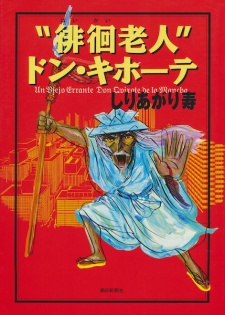
"Haikai Roujin Don Quixote" (Don Quixote of La Mancha, A Wandering Old Man) by Kotobuki Shiriagari represents a fascinating reinterpretation of Cervantes's classic, set in La Mancha in Kanto. It focuses more on capturing the essence of the character than its form, successfully integrating it into contemporary Japanese issues.
The protagonist is portrayed as an old man wearing DIY samurai attire, a yukata with zori sandals, and carrying an origami paper kabuto (traditional samurai helmet) instead of a barber's basin, creating the same anachronistic contrast as in the original work. This Japanization of Don Quixote is not merely aesthetic, as
...
it connects the Spanish knight with the figure of the samurai, based on similarities such as the code of honor.
The initial appearance of Japan's Neo-Don Quixote has an "epic" and even humorous tone. However, the work evolves beyond this initial presentation and reveals that this Japanese Quixote was previously the director of a major construction company, whose life changed tragically after being indirectly responsible for his wife's death. He now wanders deliriously searching for his deceased wife while trying to atone for his sins by fighting for a society less "controlled" or focused on values that, for a samurai, are not correct.
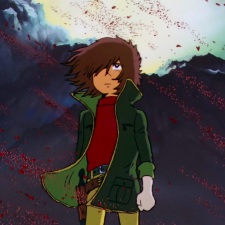
The manga uses the figure of Quixote to offer a social critique of contemporary Japan and, by extension, of any society subjected to "capitalist determinism." The message here is highly interpretable, so I'll try not to say anything too strange. I speak of capitalist determinism due to the "control" generated by television? (haha, a bit like Leiji did in "Captain Harlock"); I criticize control, deception, greed, etc. Many scenes are absurd because they are seen through the eyes of the protagonist; absurd but not false, simply exaggerated. I'm not going to summarize all the scenes because they're open to interpretation, and it would be much better if you gave them a try.
The art is strange; the lines are irregular, the strokes seem almost improvised, and the characters' expressiveness borders on surrealism. This style, far from being a flaw, reinforces the work's atmosphere. It's not a visually appealing manga in the conventional sense, but this isn't like Fukumoto's mangas, since the art adds to the work. Virtually all the art is done to emphasize the message, even using real backgrounds and human faces. I particularly like this representation of a controlled society moving in the same direction, a bit like in "Metropolis," but I see it more reflected in my reality when I'm on the subway and there are so many people walking in the same direction.
Don Quixote acts like a madman to have a freedom he didn't have. Don't be afraid to seek the freedom you don't have; the final note is great. Keep in mind that this salaryman wouldn't have been able to deal with the causes of his wife's death if it weren't for his crazy behavior. It's a great adaptation, especially because it captures the essence of Don Quixote and adapts it in a novel way.
I used google translate.
///
Español:
"Haikai Roujin Don Quixote" (Un viejo errante Don Quixote de la Mancha) de Kotobuki Shiriagari representa una fascinante reinterpretación del clásico cervantino ubicado en La Mancha a Kanto. Es una obra que se centra más en capturar la esencia del personaje que su forma logrando insertarlo en las problemáticas contemporáneas japonesas.
El protagonista aparece caracterizado como un anciano que viste una vestimenta samurai DIY, yukata con sandalias zōri y porta un kabuto origami de papel (casco tradicional de samurái) en lugar de la bacía de barbero, creando el mismo contraste anacrónico que en la obra original. Esta japonización de Don Quijote no es solo estética, ya que conecta al caballero español con la figura del samurái, basándose en similitudes como el código de honor.
La aparición inicial del Neo Don Quijote de Japón tiene un tono "épico" y hasta gracioso. Sin embargo, la obra evoluciona más allá de esta presentación inicial y revela que este Quijote japonés fue anteriormente el director de una importante empresa constructora, cuya vida cambió trágicamente tras haber sido responsable indirecto de la muerte de su esposa. Ahora deambula delirante buscando a su difunta mujer mientras intenta expiar sus pecados luchando por una sociedad menos “controlada” o focalizada en valores que para un samurai no son los correctos.
El manga utiliza la figura del Quijote para hacer una crítica social al Japón contemporáneo y, por extensión, a cualquier sociedad sometida al "determinismo capitalista". Aquí el mensaje es muy interpretable así que trataré de decir nada muy raro. Hablo de determinismo capitalista debido al “control” que genera la ¿televisión? (haha un poco como Leiji hizo en "Captain Harlock"), critica el control, el engaño, la codicia, etc. Muchas escenas son absurdas porque son vistas desde los ojos desde el protagonista, absurdas mas no falsas, simplemente exageradas. No voy a resumir todas las escenas porque son abiertas a interpretación y sería mucho mejor que tu le dieras un intento a interpretarlas.
El arte es raro, las líneas son irregulares, los trazos parecen casi improvisados y la expresividad de los personajes roza el surrealismo. Este estilo, lejos de ser un defecto, refuerza la atmósfera de la obra. No es un manga visualmente atractivo en el sentido convencional, pero esto no es como los mangas de Fukumoto ya que el arte añade a la obra. Prácticamente todo el arte está hecho para resaltar el mensaje incluso usando fondos y rostros humanos reales. Particularmente me gusta esta representación de la sociedad controlada moviéndose en la misma dirección un poco como en “Metrópolis” pero lo veo más reflejado con mi realidad cuando voy en metro y hay tanta gente que camina en la misma dirección.
Don Quijote actúa como un loco para tener una libertad que no tenía. No tengas miedo a buscar la libertad que no tienes, la nota al final es grandiosa. Tengan en cuenta que este salaryman no hubiera podido haber peleado con las causas de la muerte de su esposa si no fuera con su actuar loco. Buena adaptación sobre todo porque captura la esencia de Don Quijote y lo adapta de una forma novedosa. Aunque realmente el idealismo no conduce a nada bueno, nadie quiere ser Don Quijote realmente.
Reviewer’s Rating: 7
What did you think of this review?
Nice
 0
0
Love it
 0
0
Funny
 0
0
Confusing
 0
0
Well-written
 0
0
Creative
 0
0Show all



.png)