
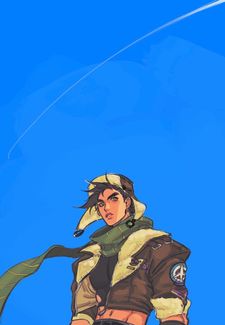
If you had to ask me what my favorite anime ost was, I would probably struggle with a straight answer. However, if you asked me what my favorite ost track was from an anime… I would honestly still struggle to give you a good answer since I have the musical taste of a fucking pleb. Though, despite my uncharacteristically inarticulate perspectives when it comes to music, I can confidentially say an anime ost track in my top 5, is “sweet dreams” by Kensuke Ushio from the Chainsaw Man Season One official soundtrack.
I consider myself a pretty big fan of the up and coming ost composer
...
superstar Kensuke Ushio. The Koe no Katachi soundtrack, his second major work, was basically one of the soundtracks of my life during my first two years of college. If I was particularly solemn during my late morning breakfast, if I was trying to take in the beauty of an Autumn sunset while biking home from therapy, if I was pensively looking out the window during a mid-December flurry while waiting for one of my online friends to finally call back, Kensuke Ushio’s key strokes were there with me. Sweet dreams (lowercase), is one of Ushio’s finest pieces despite it resting innocuously in the middle of the soundtrack. It’s a piece, in its quietness, in its rich articulated sounds, so morose and so pleading, that in two in a half minutes perfectly captures everything Chainsaw Man is at its core. Ushio’s track starts so beleaguered, yet still present, and continues growing in volume throughout its runtime that it really captures what the series is emotionally, in its considerable tragedy.
One of the biggest complaints surrounding the first season of the Chainsaw Man anime is that while it was a good adaptation, but a bad Chainsaw Man adaptation. That the work doesn’t capture what makes the manga fun to read, nor pin down its eccentric imagery and tone, at least, in the sensibilities that a lot of the fans wanted. And for a long time, I agreed with these complaints with little contention. However, viewing Chainsaw Man The Movie: Reze Arc has allowed me to understand better what its predecessor fails, but also gets right, often surpassing this film which everyone has been gassing up since its release in North America.
I want to say, plainly—for those in the back, that most people will like this movie. Hell, I like this movie! However, I feel as though I was severely misled whenever people talked about Reze Arc from a visual standpoint. I was consistently told the csm movie is “basically the same as the tv show, but with more color,” and this one of the few times in my life where I can say “wow, nobody knows what the fuck they’re talking about.” Despite them both being largely faithful adaptations of the same source material, both works emphasize different aspects of Chainsaw Man Part 1, and thus entire scenes turn out VERY differently. In short, Ryuu Nakayama (S1), emphasizes the emotional journey that the characters experience in csm, and is very long-term focused. Whereas Tatsuya Yoshihara (movie) emboldens the more action packed, humorous, and sensationalist elements that scaffold the first part of the manga.
For an example, to keep things vague, there’s a scene in the movie that takes place in a theater. It’s a scene that’s instrumental to the characterization of one of the parties involved, it’s honestly one of my favorite scenes in manga. Ryuu Nakayama’s S1 would really highlight the significance of this scene, coaxing out its meaning, really allowing you to sit with the characters. Whereas Yoshihara’s csm presents the events almost exactly as they are in the manga, but without the capacity to pace the scene like you would when you read it, leading to a more matter-of-fact depiction of the events involved. Ironically, despite there being noticeably more color in basically every shot, when the theater scene ended, I felt very little, if anything. Honestly, I was more concerned over the fact that I felt so little, than whatever the hell actually happened on screen.
Another reviewer on this site used the term “whelmed” when talking about this film. And while I’ve never encountered this term outside of the internet, I think it encapsulates how I felt towards any of the non-action-oriented scenes in the Reze movie almost perfectly. Of course, I’m a source reader, so I’ll inevitably sound like some kind of fart-sniffing elitist. But I don’t think I came away with a strong inkling from any of the scenes outside of respecting the craftsmanship. In other words, it feels like Tatsuya Yoshihara has nothing to say about Chainsaw Man visually outside of making the action scenes look as cool as possible. Now this could be a product of MAPPA having more control over what Yoshihara was allowed to do from the producer’s standpoint, but I don’t think it’s a coincidence that in most scenes I don’t get a particular impression of Chainsaw Man merely beyond the content being adapted.
Now, this isn’t to say that Ryuu Nakayama’s adaption of the first 39 manga chapters was a flawless masterpiece unforeseen seen since the fucking Godfather, there’s clear problems with it. Problems that people haven’t been shutting up about since the trailers for this film dropped. But at least when it came to the truly integral scenes, Nakayama was able to perfectly blend his sensibilities, with the source material’s emotions, in this very liminally morose kind of angle, which is perfect for Fujimoto’s style.
However, Yoshihara does succeed in embellishing Fujimoto’s action scenes into something visually readable while still being intense. I will fully admit, all the actions scenes in this movie were better than anything we got out of season one of the anime, and not just because it’s a film. I can’t even imagine the back half of this film without Yoshihara, it would feel like a hypothetically lamer piece without as much confidence. Additionally, the humor has been improved overall. It’s crazy to think, but actually allowing your animators to have FUN while drawing comedy scenes will, in fact, improve the humor your work, crazy shit I know.
My point is, even though there are improvements over its predecessor, these changes didn’t come without stylistic casualties that make the anime adaptation less satisfying. Like, genuinely, could you imagine a substantial portion of the Himeno content from season one without the same level of delicacy or visual weight? Ryuu Nakayama’s Chainsaw Man made a lot of mistakes, but it knew what was important, and how to let you know it was.
Now, some may mention, that Ryuu Nakayma didn’t draw every microscopic fucking frame, that there were other artists who handled important scenes. In fact, most of the core staff of CSM: Reze is basically the same as the show, how could I assert any of my anxieties with serious confidence? Well, if we watched the same film, you would immediately be able to tell me, because you would’ve seen all the scenes I alluded to in this review, and how they could have been MORE emotional. Hell, don’t even listen to me. If you’re skeptical of my claim, read the manga. There are arc guides online, start at chapter 40. After that, then feel free to let me know if my claims are baseless, because I am confident that Fujimoto’s imagery, its power, hits far more when it’s not flying past you.
This all ties back to what I was saying about Kensuke Ushio’s impeccable soundtrack for this series. I have yet to listen to the Reze Arc ost as of writing this review, but man, outside of maybe one track, the film prevented me from really soaking in the ost as the show did. I remember the scenes where sweet dream was utilized in season one, because, the direction allowed for Ushio’s soundtrack to shine during the most important scenes of the first half of this saga. Kensuke Ushio’s work, when it’s not outputting the most adrenaline pumping electro sounds ever, captures the liminal agony—the yearning, wistful, solemn, and contemplative tone, that emanates out of so much of Chainsaw Man. It depicts, in undisclosed notes, everything I love about this story. There’s a chance that the next entry in the Chainsaw Man anime adaption will be able to strike a greater balance, highlighting those things I love. But this film made me substantially more uncertain about that prospect, and that’s a shame.
Have a nice day.

Nov 8, 2025
Chainsaw Man Movie: Reze-hen
(Anime)
add
Mixed Feelings
If you had to ask me what my favorite anime ost was, I would probably struggle with a straight answer. However, if you asked me what my favorite ost track was from an anime… I would honestly still struggle to give you a good answer since I have the musical taste of a fucking pleb. Though, despite my uncharacteristically inarticulate perspectives when it comes to music, I can confidentially say an anime ost track in my top 5, is “sweet dreams” by Kensuke Ushio from the Chainsaw Man Season One official soundtrack.
I consider myself a pretty big fan of the up and coming ost composer ...
Reviewer’s Rating: 8
What did you think of this review?
Nice
 0 0
Love it
 0 0
Funny
 0 0
Confusing
 0 0
Informative
 0 0
Well-written
 0 0
Creative
 0 0Show all 
Sep 17, 2025 Recommended
Realistically, given the kind of anime made today, there’s a serious conversation to be had if a show like this is even necessary. With its subsequent sublimation into light novel metatext, whether it be through a meta-otaku high school romcom type thing, or heaven forbid, an isekai light novel; the harem genre has become more of an ingredient in a greater dish, or an obnoxious object to be shoehorned into something currently publishing, rather than the main course of a narrative on its own. It’s particularly interesting to see the slow and innocuous demise of the shonen harem manga. Especially in a post-Quintuplets world, I
...
think it’s hard for a lot of mangaka to imagine tackling the genre as sharply or as elegantly without simply falling into pastiche (which has already happened to minimal success). You still have your occasional bread and butter ecchi harem romcom, sure. But with Shonen Jump’s recently contracted allergy to harem stories, in the hopes of not alienating their 50% female readership, there are slimmer and slimmer harem pickings every year. However, Dealing With the Mikadono Sisters is a Breeze proves once again that a rudimentary understanding of basic human psychology can open up the opportunity for a shonen harem manga to resonate with millions across the world once again.
To quickly pitch, Mikadono Sanshimai wa Angai, Choroi, is about a kid named Yuu Ayase who was the son of a now deceased famous actress Subaru Ayase. Thankfully, the wealthy Mr. Mikadono, a friend and patron of Yuu’s mother, becomes the kid’s legal guardian and helps him enroll in the prestigious Saika Academy. Yuu, despite being naturally attractive, pretty much sucks at everything and isn’t terribly athletic. However, because his mother was fairly neglectful, the subsequent parentification led Yuu to develop a general aptitude towards cooking and cleaning. So, in very harem manga-esque development, Yuu is requested by the Mikadono patriarch to be the support of his three prodigious daughters, for they also do not have a mother. In turn, Yuu becomes determined to build a strong family with the girls, and in doing so, ends up rizzing all of them and harem hijinks ensue. I’ve opined in past reviews about shoehorning in a harem as a trope versus focusing on harem as its own narrative device. Foundationally, this is likely due to the influence of manga editors contorting their author’s narratives into something that injects artificial tension without any substantial consequences. And I understand, as much as anyone else, that harem is an inherently dissonant and contrived kind of story structure. On its face, that you could have a scenario of multiple women all interested in the same man, and for none of those women to properly act upon their feelings, while somehow all of them being teenagers, doesn’t make any sense. Ironically, High School DxD’s juvenile, frat-esque approach with actual polygamy is somehow more realistic to me. However, harem being treated as it is still pisses me off. I can smell the pandering a mile away, and frankly, it reeks of cowardice. It’s the same hokey and hackneyed narrative crutches you’d get with a love triangle except the mc can collect women like Pokemon. The only reason a harem exists in a show like My Dress Up Darling, when the main characters are five inches away from boning every other episode (and that isn’t a metaphor or an exaggeration), is to make Gojo look good in a mutually gendered power fantasy kind of way, like Bisque Doll likes to do. Dealing With the Mikadono Sisters is a Breeze, on the other hand, is honest with what it wants to do—and its honesty is one of the series’ greatest strengths. Mikadono understands first and foremost that it is a shonen harem manga, and it respects that. It’s not trying to hide its structure under layers of pretentious irony like in Makeine or is trying to be something else entirely with a harem in it because “anime,” like in every isekai light novel. There are no gimmicks like in an ecchi harem comedy, it’s a tried and true, bread-and-butter, shonen harem romcom that relies upon its strong characterization to keep audiences coming back week after week. It’s not trying to reinvent the wheel but fails, it instead feels like the first real successor to The Quintessential Quintuplets we’ve seen this decade. There’s a boy, there’s some girls, they’re in this ridiculous ass scenario, but it’s good this time, and you’re never truly sure who is going to win. Quintuplets played this game where you were never supposed to really know who was going to become Futaro’s wife, so theoretically, any girl could win. And ideally, even if you picked your team and were ready to go to war for her, the author did well to build up multiple acceptable answers to its starting mystery. Now, many contend with Go-toubun’s ending in how it failed to do this by the time the series reached its final few volumes, but a serious, semi-successful attempt was made. Mikadono Sisters in response, reduces the number of girls, but in doing so, can make an even stronger case per girl. One of my biggest contentions with the harem genre in basically any of its iterations is that 99% of the time it’s incredibly obvious which girl is going to win. You can even go back to Love Hina or I’’s or some shit, and there’s always “the main girl” and some other bitch who ends up becoming the silver medalist. This is likely a product of the mangaka not thinking far enough ahead as to how they are supposed to balance all of these disparate personalities and relationships, especially wherein you could realistically see this cardboard cutout of a main character end up with any of the girls. What’s even more unfortunate is that there is always a moment where the girls properly relent the mc by saying something emotionally meaningful, especially for the first few drop offs, the series sort of just gives up. Like this chick with the glasses and the boobs can still be there for fan service but she won’t develop or have an interesting internal world outside of the mc for the foreseeable 80 chapters. Mikadono Sisters is the kind of series where it’s actually worth your time trying to theorize who’s going to win the harem. Each girl has their own argument, but even relying upon genre convention isn’t enough, for there isn’t some kind of “queen” of the harem. And this is exciting; I want to feel any kind of remote tension at all for who is going to win. Furthermore, the girls themselves are also strong characters for this kind of scenario. I’ve seen the comments joking about how all the girls are some shade of tomboy, which is true, but others have noted that they’re all kind of tsunderes. The Mikadono sisters are fun in that even if you could similarly label them, it only serves to highlight the nuances in how different they are. By the end of the season, we’ve somewhat established the unique dynamic Yuu has with each individual girl, and how their specific gender expressions affect them. Dealing with the Mikadono Sisters is a Breeze has a lot of interesting angles to explore gender dynamics in its narrative. In academia they like to use the term “gender play” to broadly describe the process in which gender conventions are messed with or manipulated in ways that are harmless. Kazuki is an explicitly gender non-confirming character who becomes boxed into her role as a princely girl. In a typical harem narrative, the mc would help Kazuki discover how she needs a man in her life, and allows her to live as her “true self,” a feminine woman. However, Mikadono Sisters takes a much more nuanced approach. Kazuki does, and will continue to, engage in several dilemmas due to the unique expression of her gender identity, but she will likely not give up her role entirely; Kazuki likes being a boyish girl and has since she was young. Even so, she is still a woman, and through Yuu, is looking for ways for her to feel pampered and wanted. This manifests in her being interested in Yuu occasionally taking on more masculine roles, but she also wants to protect him and take a more measured, assertive position in their relationship. There’s seemingly this undercurrent of her really liking to dote on Yuu, like the fact that he’s so pathetic makes taking care of him kind of hot? Even if most of the time, he will be taking care of her, it's a whole thing. And it’s not just this one girl, all of them are kind of like this or have their own particular thing. What Aya Hirakawa has done is lampshade the gendered undertones in a lot of harem stories (in that the women really don’t need the man to make a living, instead for emotional support) and made that dynamic the basis of the story. It’s why I think all the girls are a bit boyish in the first place. In addition, Aya being a woman allows for Yuu to be a protagonist that can exist beyond being a surrogate for a presumably male audience and appeal to a potential female demographic. Because, even if MAL doesn’t necessarily reflect it, Mikadono Sisters has been quite popular this season. I’ve consistently seen this show’s latter episodes in the upper ends of those online anime magazine episodic ranking polls every week, even ones that lean toward women. And I think it’s because Yuu’s more sensitive earnestness, and home ec skills, are aspects that appeal to a lot of women in the modern world. It’s the main reason (outside of well written female characters), I believe Mikadono Sisters could reportedly sell 1.5 million copies before an anime adaptation even aired, something that’s kind of an anomaly for a harem series these days. We’re probably never getting Quintuplets numbers ever again, that was a statistical fluke. But the evidence has shown itself that even heavily male dominated genres can find a broader audience if they can just walk off their bullshit for like thirty seconds. Speaking of, for those that are curious, this is not an ecchi harem comedy. In fact, there’s a flabbergasting lack of fanservice in this show, but that’s more a reflection of the mangaka’s style than anything else. I’m not opposed to fanservive, but what we have balances the more wholesome tone Mikadono attempts much more coherently. Additionally, the visuals in Mikadono Sisters are very solid. PA Works is unique in that they’re one of the few anime studios wherein their shows are more of a studio effort than the vision of a small set of artists and their team of independent contractors. And PA Works shows, in fact, look good—this show is no exception. There are the typical short cuts you’re likely to find in a tv production like this, but nothing we’re not used to at this point, and the show seems like it tries to avoid it when possible. Arguably the biggest complaint I have regarding the visuals is that there is no substantial sakuga or serious directorial experimentation. Now, this is a harem manga, so I’m honestly not sure why you would be expecting crazy visuals. And I will say there was an episode or two with some neat storyboards, but nothing crazy. Either way, you won’t be seeing a production mired in bad compositing or off-putting character art. Hell, I dropped the Quintuplets anime because the visuals were invariably bland (outside of the shaft animated bits I’ve seen online), and this show is heads above that if that says anything. I could levy more complaints. But honestly, they would be the same complaints I’d give to about 99% of any harem manga. Like, it would be cooler if there was more physical intimacy between the mc and all the girls, but that would inevitably cause conflict in such a way as to end the harem scenario. So, no matter what I do, I will likely never find my perfect harem show, but that’s honestly fine. I can respect the terms the show is guiding itself under as long as it doesn’t suck, and Mikadono Sisters is good, so it’s fine. Not to overly praise it but, Dealing With the Mikadono Sisters is a Breeze is easily the best harem anime of the decade. Now, this isn’t hard to do at all when the genre has been tokenized to irrelevance, but good art should be recognized for the value is does, in fact, provide. Interestingly enough, Mikadono Sisters is a work that well inspires me to make art in my personal life. The pathology of the main characters is so tactile, so strongly present, that other characters with similar neurosis seem fun to write. Each of the Mikadono sisters have daddy issues, some even have mommy issues, and their struggles are presented in a way as to be clear but not nauseatingly trite or overwhelming. I can admit that this, of the 15 shows I’m trying to watch this season, was the show I was the most excited to come back to—and every time I came back, I was always well engaged. Something about this show is infectious, and I frankly can’t wait for it to hopefully come back for more content. Who knows where this adaptation will go necessarily? We’re 150+ chapters into the source, and only now does it seem like the story might wrap up by like volume 22 or something, when 16 is just now releasing. Even Quintuplets, one of the most successful manga ever made, has struggled with one of the most regret ridden, schizophrenic adaptations I’ve ever seen. It was clear the production committee only planned up to the movie, and because of that, spent the last three years backpedaling that as hard as they could. And if THAT couldn’t get a well-adjusted adaptation, I doubt this can either. Whatever it may be, I’m happy I was able to catch this show when I could, and I’m looking forward to whatever bizarre creative output comes from me because of it. If the length of this review doesn’t tell you something, then I don’t know what will. Have a nice day.
Reviewer’s Rating: 8
What did you think of this review?
Nice
0
Love it
0
Funny
0
Confusing
0
Informative
0
Well-written
0
Creative
0Show all 
Oct 22, 2024
Make Heroine ga Oosugiru!
(Anime)
add
Mixed Feelings
I don’t know if it’s just me, but doesn’t this year of anime seem kind of… bad? Two Jump manga ending with unilaterally disappointing conclusions aside, 2024 is probably the weakest year of the decade so far, and one of the weakest years of anime I’ve witnessed since joining the community six stupefying years ago. Despite harboring a strong winter season, 2024 has been the victim of constant underwhelming release after underwhelming release. In a year with Slime Isekai, Mushoku Tensei, Demon Slayer, the return of Code Geass, and the return of Konofuckingsuba, all at the same time, the most praise I’d passively seen from
...
spring was for the most recent season of My Hero Academia of all shows (and Dungeon Meshi, a show from winter). To be fair, maybe I’m just distant from the community compared to my college years, and I don’t want to sound like some self-absorbed elitist who’s arrogantly noting what flagrantly isn’t true. But, if you told me a year ago that season 2 of Oshi no Ko, an adaptation of surely one of the defining manga of the decade, was going to be fighting for top billing of the summer season against some goofy cheap ass light novel adaptation because the imouto went viral on social media for being a deranged, incestuous, weeby freak, I would’ve thought OnK had shat itself far earlier than what fans of the source material were claiming. However, that isn’t the case at all, OnK Season 2 is very well received, people just give that little of a fuck.
In this way, I want to sympathize with a show like Makeine. The show is clearly something produced with the full intention of being one of the most popular anime of the year, and is thus packed to the brim with the most passionate staff A-1 pictures could muster that didn’t get funneled into the Solo Leveling meat grinder. Under the helm of freshman director Shotaro Kitamura, A-1 created what is essentially a Cloverworks show under their currently existing deleterious system. There’s a sense of youthful creative ambition that’s nonexistent in any other A-1 show that, while not as vivid as you would find in a Cloverworks project, is still far above the cynical, lifeless, abused, and beleaguered A-1 Pictures of 10 years ago. In some ways, Makeine feels like it was made to be a massive flex that eagerly awaits to be read off each staff member’s resume, and if that’s what the showrunners wanted, they succeeded. Unfortunately, there’s a degree of tension in the writing that leaves me perplexed. I wonder, how did so many exceptional animators get sucked in to working on some passe light novel adaptation? Realistically, it’s just that a handful of cunning producers from both A-1, Cloverworks, and Wit of all places, found the source material to be strong enough to justify reigning in a bunch of hyper-talented animation staff in an industry which requires natural skill to survive. But if this material was enough to convince the sublimely talented Souta Yamazaki to create one of the most impeccably realized ED’s of the decade; then maybe I really am some solipsistic, ivory tower climbing, Frankfurt school gas huffing, Jacques Derrida dickriding, disciple of Theodor Adorno, who hates all things fun and wants to watch the world burn. Because this? It ain’t it chief. For the uninitiated, Makeine is a meta-otaku romcom light novel about some dweeby bookworm who so happens to make friends with three anime archetypes whom either were just cucked, or are about to be cucked, in their own high school harem romcom scenario—and how they emotionally manage in the fallout. The meta qualities of this one are excruciatingly apparent, each girl is attached an archetype that tends to lose harem romcom scenarios (the osananajimi, the tomboy, and the dandere), they lose to more popular anime girl tropes, and they lose out on boys who are themselves, visual iterations of typical harem romcom main characters. This show is so unashamedly meta that it almost feels dated sometimes, like this is straight up a show from like 2014-2015 that somehow tripped on a flight of stairs and got isekai’d 10 years into the future. That doesn’t mean that’s what my problems with the writing are, I love my meta bullshit as much as the next guy, but it does clearly tell me what draws Japanese audiences to a story like this. I’m sure most otaku are not casanovas in their own right, so having a story where cute girls navigate through the same skin peeling emotional experiences they had as teenagers, and on top of that achieve some kind of emotional catharsis, is deeply fucking satisfying. It doesn’t hurt that Makeine is full of “down to earth” conversations where characters sincerely talk through the plot or their feelings about the plot. There is your decent share of anime melodrama, but in many ways Makeine is evidence of the natural progression of a post-oregairu light novel scene. Characters are still going to do stupid shit, and be way histrionic about everything, but they function based upon pathology, and that will be progressed in such a way as to be narratively satisfying. The story is still fairly lighthearted so everything will ostensibly work out fine; since this isn’t like real life where even intimate friendships will implode in a single conversation because one of the parties involved refuses to lower their ego, characters are ironically more reasonable. But these dashes of realism are partially what make Makeine frustrating for me to watch, even if I can respect how conversations are written scene by scene. It becomes incredibly jarring to spectate a delicately crafted scene, with characters struggling to convey their feelings or accept themselves, only to dive head first into a bit with the quirky student council president with big tits who’s also a gyaru, who also acts and talks like a fucking ghost. There’s a degree of eccentricity that I can appreciate, even support in more down to earth settings. But past a certain point, Makeine just indulges in gimmicky light novel bullshit that actively undercuts its ethos. I can’t believe I’m saying this, but the tone is actively disrupted by being so inconsistent, and I’m the guy who supports drastic narrative tone shifts! Because otherwise, Makeine is generally a lighthearted slice of life show full of the typical mundane scenario writing you expect in shows like this (they go to the beach, they have a school festival etc.). And even then, these aforementioned jovial moments can even undercut the serious drama that you’re supposed to be invested in. There’s this segment in episode 6 where one of the main characters goes like miles into the country to be all depressed, and the main cast all come out to go see her. This being incredibly inappropriate aside, they get lost on the way and just start fucking around on a riverbed catching crabs and taking Instagram photos. The bit itself is fine, but this completely undercuts the little tension I had because I actually liked the character involved and was wondering if they were okay. I’m sure in the novels this felt more natural, or more justified, but this completely broke any sense of tension I had. I had a few issues with this arc in general, but suffice it to say, Makeine’s writing is such that it makes it hard to take seriously when its whole shtick is that it’s a “serious story with real emotions that’s also a meta-otaku light novel.” Complaining about the writing aside, I mentioned before that there were some serious staff behind this show, and you can trust me when I say that is very much true. Makeine looks good, it’s probably the best-case scenario for a show of its kind. While there are still a few of the shortcuts you tend to see with TV anime, Makeine is consistently well animated, is often well storyboarded, and has some of the most effective digital compositing I’ve seen in a slice of life show. I’ve seen people comparing Makeine to looking like a Shinkai movie, and for once, I can kind of see where they’re coming from. These days, Shinkai movies are always engrossingly cinematic, even if the writing is lackluster. But importantly, Shinkai movies have a particular form of digital compositing and color direction following the Children who Chase Lost Voices. And when I watch Makeine, if I squint my eyes, I can see glimpses of something like The Garden of Words. But comparisons aside, there are scenes of Makeine that look genuinely incredible, and if they were in a better show I would be gassing this thing up to all my friends and pushing it to the top of my best of the year list. That isn’t to say the show looks incredible all the time, there were episodes given to less talented directors/storyboard artists, and in some scenes, it felt like they had no idea what the fuck they were doing, so there’s some noticeable drops in quality each episode. But I can recognize that Makeine is a step above normal anime in terms of direction and general visual fidelity. As it stands, even if not every dramatic scene is my cup of tea, I think it melds well enough to the visuals to justify putting in all the work, the problem is the rest of the show in between. Even now as I am reaching the end of this review, I feel complicated on Makeine. By the time I finished, I really wanted to like it as much as the internet seems to, but I just fucking can’t. I don’t know how well I’ve conveyed what it’s like to what this show scene by scene, but I’ll say, despite Makeine being a comedy it’s inconsistently funny. Komari is by far the best character in the show, and easily garners the most laughs from me, but it falls off pretty quick with everyone else. I should love Lemon but it seems like the main joke is that, much like with Tomboy characters, they can be a little overfamiliar and dense to the fact that everyone thinks they’re hot as fuck. There’s a bit early on with Lemon that made me want to drop the show because I thought it was so corny that I was completely turned off. Yes, I get it show, Lemon has some very lickable abs, I don’t need to be reminded of that every other episode. With Yanami... eh, the show really wants me to like her in the same way you’re supposed to like Chisato from Lycoris Recoil but she’s dumb and eats a lot. And in many ways Yanami is charming, but she is ultimately just light novel main girl so she has this dissonant maturity and self-awareness beyond her years that’s intended to appeal to an older audience in a way I find a bit trite at this point. Additionally, I feel like Hikaru Toono’s performance delves a bit too hard into overacting, and as such, ends up upstaging all of the other characters in the show. In this sense, I can’t really “enjoy” her bits because they feel constructed for explicit likability and that’s also a turn off. There isn't a whole lot more I can say about Makeine, it is not the kind of show which possess the depth necessary to expound upon it further. Just know, that you may be better suited watching something else far more fulfilling.
Reviewer’s Rating: 4
What did you think of this review?
Nice
0
Love it
0
Funny
0
Confusing
0
Informative
0
Well-written
0
Creative
0Show all 
Jun 30, 2024 Mixed Feelings
Season four of Demon Slayer: Kimetsu no Yaiba might be the first time since becoming an anime fan where I watched an entire season of television, and the only real tangible thought I had consistently throughout was “this is a shounen.” Outside of recognizing its target demographic, I felt effectively nothing of what is supposed to be the biggest anime franchise in the world. I’m not the type of character to stand from my intellectual ivory tower where I watch shit like Asatte no Houkou or Koi Kaze, shows that no one has ever heard a fucking peep about, and unilaterally lambast mainstream (shounen) anime
...
like its reality television, I can like this stuff as much as the next guy. However, I also possess the basic faculties necessary to completely disengage from a work because I recognize it doesn’t provide much insight in whatever subject matter it chooses to tackle. Demon Slayer Season Four may be one of the most rote takes on a pre-final boss power up arc you could possibly find in the medium today. It’s so bereft of any kind of serious stakes for most of its run that I’m legitimately surprised they didn’t try to add content like they did for the television release of Mugen Train or something. I really don’t want to be some kind of navel-gazing Demon Slayer hater, especially given that I enjoyed parts of the first season, but at this point I don’t think people would even fucking care if I did.
Much like My Hero Academia, the ardent support base for KnY has been falling off since season three and for a good (but separate) reason, the story is consolidating itself entirely around Tanjiro, thus depriving the narrative of any kind of serious depth. We are 62 episodes into what will probably be an 80+ episode long television series, and we still have no idea what the backstory of one of its supposed “main characters” are. How the fuck can Inosuke fight!? Who is he? Why is he here? I shouldn’t be asking these questions at this stage in the game. The only thing we’ve gotten is that he has a heightened sense of touch, and he can’t be poisoned because “I’m from the mountain” or some bullshit like that? The only facet of a standard shounen manga that Gotouge is even good at writing is the sad backstory, and we can’t even get that. Hell, if you count season 2, we’ve BARELY gotten any Zenitsu or Inosuke in the last like 20+ episodes, and they’re supposed to be the flavor that accentuates Tanjiro’s personality. And because of this, all we get for most of this season is Tanjiro going around to various Hashira and being like “I’m a good little boy :D.” Such incredible drama, literally crying and throwing the fuck up. I know the author was trying to drive a greater point home that Tanjiro is a living ideal that inspires other people in the narrative to push past their limits, but his personality is still foundationally shallow. It leads me to believe this entirely inconsequential trajectory we’ve been on since season three has entirely been the product of whatever was going on in Gotouge’s life back in 2017/18 that lead her to make a mad dash towards the manga’s ending, regardless of the consequences that would have on the overall storytelling. In a timeline where God is real, season four should’ve been jumping back and forth between Zenitsu and Inosuke, elegantly depicting their respective fights with their own respective demons while Tanjiro trains. Since Tanjiro has no real character to develop, it is on THEM to compensate for him and develop their own ideas accordingly. Season one created the loose foundations to do it, but the manga clearly failed to capitalize on its own potential, leading to another season lacking any serious intrigue (at least until the final episode where they shoehorn in the beginning of the manga’s final arc). And any of the development we do get this season is just kind of laughable. One of the three characters from the first episode, who’s only been in maybe 4 of the 60 something-odd episodes released so far, completely releases like a decade’s worth of repression and trauma because the main character says one thing? Are you fucking kidding me? I legit giggled out loud in pure incredulity at Tanjiro’s Christ-like persuasive abilities despite him lacking any charisma. When Tanjiro helped out Kanao in season one, before the show became this giant, corporate, franchise homunculus, even then I thought it was a tad out of character for him to have any genuine charm. It felt like the mangaka wanted to start actually imbuing life into her puppets only to give it up because of whatever was going on in her personal life. So with Tanjiro being “in character” (as the flanderized, empty-smiling husk he is), it made it even more stupid. And this nonsense involves the Hashira, the supposed “good characters.” Laughing my fucking ass off. In terms of visuals, it’s the same as ever. Compared to another Ufotable show from ten years ago I’ve recently been watching, Fate/Stay Night: Unlimited Blade Works, Demon Slayer’s character art is incredibly consistent and impressively displayed, with thick outlines in abundance. While you can criticize the show for lacking truly exceptional directorial talent, something Ufotable has been struggling with since losing Ei Aoki in my opinion, the studio’s usual style of 3D storyboards, dynamic camera movement, vibrant color design, and extravagant digital compositing, ends with Demon slayer still looking impressive with genuine artistic demonstrations. You know this already it’s season goddamn four, there’s no reason for it to magically look dogshit at this point even with the limitations of TV animation. Suffice it to say, there isn’t much else to say about Demon Slayer at this point outside of it soiled what could’ve been mildly interesting. I’ll keep watching every year because I want to know what’s popular, and every year until it finishes, I’ll keep being underwhelmed. It’s all downhill from here motherfuckers, I’ve not heard anything impressive about the final arc so it’s just going to be trudging along with more fights until this work gasps its last fancifully depicted breath and we never have to hear about it ever again. It’s so bizarre to have a work, which is one of the defining pieces of Japanese media from this side of the century, be something so absolutely hollow, bland, and uninteresting. I may write something for whatever half-hearted finale we end up getting, but I think this 1200 words I just pumped out is probably all that this series deserves. It’s sad, I’ve had barely any time to watch anime these last two months because I now have consistent employment and dared to have a social life, and the only show from this season I could possibly fit into that schedule, that I spent three hours watching, that I dedicated like three hours to write for, was Demon fucking Slayer of all things. I know, it depresses me too. Have a nice day.
Reviewer’s Rating: 5
What did you think of this review?
Nice
0
Love it
0
Funny
0
Confusing
0
Informative
0
Well-written
0
Creative
0Show all 
Mar 30, 2024 Recommended Well-written
TL;DR: I understand that this review is stupidly long and kind of personal. If you are even on the fence, give this show a chance, it’s great. And if you can allow yourself to enjoy something so eagerly sensitive, you won’t regret it.
One night back in late 2019 shortly following one of the worst months of my life, I was called over to sit next to this mysterious girl while riding the bus. It turns out this person was in my creative writing class and recognized me, she liked some of the stuff I wrote. We hung out a few times before the semester ended. ... It turns out despite being in a life science her real dream was to write for a living, she also somehow comprehended a lot of my strange ideas, she was unintentionally pretty, and elegantly dweeby. Anyways. At this point, I think Boku no Kokoro no Yabai Yatsu can be pretty confidently considered one of the great raid bosses of romance anime, a modern classic of the genre if you will. You take a cleverly written, dense, yet still approachable romantic scenario and have it be brought to life by a seasoned industry experts, then you have the perfect recipe for a potentially exceptional experience. I feel like any praise I heap on Bokuyaba could be taken as some kind of overhyping, since at the end of the day it’s a fairly straight forward romance show, the kind where the main leads brush their hands up against each other and start blushing or some kind of other histrionic nonsense. But at least for this style, specifically in the heavily streamlined form Bokuyaba depicts, I can’t see a better form possibly existing. This is as good as this shit is ever going to get, and in that light, it deserves whatever praise its small but emboldened fanbase wishes to heap. Even though I’ve talked at length already as to why I enjoyed season one, I think it’s important to break down the general reasons why this season has specifically been propelled to the top of the charts. Since I’m sure for months now people have been incredibly confused as to why some seemingly frivolous high school bullshit is fighting alongside decade defining works like Vinland Saga. Which, if you hear me out, shouldn’t be that hard of a sell. Part 1: It looks perrrrrty Boku no Kokoro no Yabai Yatsu isn’t a show that escapes the aesthetic trappings of its setting, this isn’t some experimental extravaganza like Sonny boy. The source material is bound to a simple middle school (not high school) setting in a typical Japanese Tokyo metropolitan area taking place sometime in the late 2010’s. Yet, Bokuyaba gracefully, almost like it was born to, is able to elevate its largely blasé setting into an immersive environment where beautiful, enriching romance is blooming before your eyes. Season two specifically somehow outpaces season one in almost every aspect visually, and in particularly regards to its direction. In terms of storyboarding, character art, animation, music choices, editing, among other more micro directorial decisions, this season stands a step above the previous, and above most slice of life anime. This isn’t to unnecessarily deride or insult romance stories that didn’t have the privilege of an incredibly dedicated team of digital photographers that meticulously elevated every idiosyncratic moment, but bokuyaba does, and this sets it apart. Combined with Kensuke Ushio’s ethereal, heartstrings-pulling soundtrack, Bokuyaba is able to sell basically any scene under the pretenses of its own nostalgic adoration of adolescent love. Moments are often captured in this ephemeral liminality kind of like sports anime, moments feel substantially slower and more significant to the parties involved than what we would normally witness in real life. Most of my complaints about the original season’s production have mostly been cleaned up in the six month intermission the staff had to make season two. As such, the show largely looks beautiful, with quirky, endearing character designs and atmosphere that is able to convey both the silly, the dramatic, and the intimate. In January of 2020, I decided to get a buzzcut out of raw curiosity since I had had largely the same hairstyle since high school, it looked terrible. Like many with a buzzcut, my hairstyle didn’t demonstrate anything about my personality nor did it flatter my appearance by any stretch. Yet, when I saw that same girl I mentioned earlier in the following semester’s creative writing course, she complimented my cut. I was appreciative but confused, I’ve never had someone compliment me on such a run of the mill style before, I wasn’t sure what to think. But her compliment made me consider when we got lunch in early February, could this meal together, and our previous hang out sessions where we went to the Museum, or made pancakes together, be considered dates? “Absurd,” I thought, “there’s no fucking way.” Yet, there was a part of me that desperately wanted it to be true. Part 2: The characters actually deserve each other Despite having the series being so romance focused, Bokuyaba fundamentally cares about its characterization more, preserving its development, while still providing its audience the small moments of wholesome satisfaction and progress that comes with these cute or sensitive love stories. Often times in romance subplots in media oriented toward men, the main couple getting together is taken as such a given that I find it hardly something worth getting invested. Firstly, the girl is basically designed to be as likable to the audience and the protagonist as possible, where the only reason they’re not fucking from episode two is because either the main character has to prove to the universe he’s worth anything (not to the girl), or basic narrative contrivance. Secondly, sometimes I find “main girls” in anime so eager to be liked as to be boring. The characters in anime I tend to remember and appreciate the most are ones that contain compelling flaws that add to the greater themes of the work and blah blah blah, I’m sure you’ve heard this a million fucking times at this point. Thankfully, the featured couple Bokuyaba has enough down to earth insecurities to make the characters feel dynamic enough to be genuinely engaging. I’ve already talked about Kyotaro at length in my review on season one, but what makes his arc so satisfying this time around is that the sheer degree of his neuroticism becomes the core piece holding the relationship back. Things are made as obvious for this kid as possible, but because of his vast insecurities and feelings of inferiority, he can’t take the steps necessary to cement his relationship with Anna. In fact, even when it becomes undeniable this chick likes him, he can only contextualize it within specific constructs that seek to justify his anxieties and low self-esteem, “I have to be extra careful because if I make any serious mistakes, she’ll immediately hate me!” Bokuyaba forces Kyotaro to go through the initial hazing necessary to build the prerequisite self-worth to finally move his relationships forward. He needs to overcome himself to love someone else, this means going outside your comfort zone, getting involved in activities you normally wouldn’t, a making friends that aren’t JUST your romantic interest, these efforts build essential trust in your own competencies. It helps that there’s this bishounen imaginary friend guy, which could be thought of as the confident part of Kyotaro’s brain, that helps ground the story in something that isn’t unadulterated anxious speculation. Kyotaro’s own conception of who he wants to be through this shoujo manga pretty boy also reinforces the narrative’s general themes about needing self-love to love others. Because, dating Yamada wouldn’t possible if he always felt like she’s heads above him in terms of social status and character—which of course, if you pay attention, is a dead fucking lie. When I watched season one, despite enjoying her character, I still sort of wrote Anna off as this coomer-bait wish-fulfillment female lead who was kind of autistic. Only after starting season two, when Anna opens up to Kyotaro about her insecurities for the first time, did I realize how much the main character’s perspective colored my interpretation of this character. While anna is to some extent an idealized anime character, someone whom the author put every trait she “found cute in girls” into, she is flawed in the ways a young teenager tends to be flawed. Anna is childish, gluttonous, easily jealous, slightly obtuse to the people around her, again—super normal shit. But even Anna herself struggles with her own inferiority complex that, up until the show’s beginning, was a hindrance on her own growth as a person. And while Anna’s insecurities aren’t enough to prevent them from dating, Kyotaro’s standoff-ish personality forces her to unearth and confront her flaws in order to get closer to him. That they would openly make the female lead of an anime romcom so imperfect but in a way so banal, is a testament to Norio’s writing prowess and the unwavering faith she has in her audience. Furthermore, because Anna is trying SO ungodly hard to connect with Kyotaro, her effort unintentionally pays off by further inducing some kind of action from him. But this is why the overall romance works, both characters have their own issues to navigate, but they are fundamentally willing to put in the effort to be together. So, even though this style of romance story isn’t necessarily my thing, I think the sheer simplistic brilliance of the writing becomes something I can latch onto. And while the main couple is the focus of the series, there’re a handful of other solid characters whom entire spin offs could be made to explore their own interpretations and experiences of the same period of time. And I, depending on the character, would probably watch that shit too, that’s how consistent the writing is. The voice acting also adds to the show as well, and is so well done that even overdone cliches that would normally piss me off I can at least forgive, like all the damn puppy dog wimpering and squeaking that tends to happen in these types of shows. Boku no Kokoro no Yabai Yatsu is just so damn consistent, down to earth, and likable, that it can depict basically any romcom cliché and still come out the better for it, the writing is solid enough to keep everything fresh. It’s simultaneously like every romance anime ever made, yet somehow it surpasses them all by a confident distance. Now, you might be wondering with all the praise I’ve given this show, why my score is so low (at a mere 8 out of 10). Well... that’s going to need a bit more context. Part 3: The part of the review where I reveal too much about myself on the internet Around the time of the aforementioned lunch with that girl from Creative Writing, I realized I was, unfortunately, stupidly into her. It makes sense, she was tall, had the face of Emma Stone but a crazier body, pearly skin, an inquisitive mind, an incredible capacity for nuance, a passion for writing, she was amazing. Reflexively, I understand now that I suffered from some kind of limerence where I felt almost sick I liked her so much, though thankfully I could successfully suppress it when we were together. Though, as we were walking back from that (not) date, she confided in me that she had been in a substantial number of short and long-term relationships in the past; and her history had left her scarred to the point where she thought her ability to love someone had been broken or lost, like some spatula you swore you left in the cupboard right of the sink, left of the fridge, but now its missing. I felt an incredible weight after that, I, whom at the time hadn’t dated anyone for longer than a few months, didn’t feel like I could help her. That, even if we got in a relationship, I couldn’t find that elusive cooking utensil she wistfully desired. So, despite my love sickness, and my incredibly loose inclination she might be interested, I held back from confessing during the winter (My lack of general confidence also didn’t help). However, in March of 2020, one of the biggest global events of the century occurred, and suddenly almost every student at my university was sent home until the following semester. During this chaotic time, this now somehow nostalgic early spring, this same girl and I were talking far more often than what was standard for mere classmates. It was the kind of environment where she would throw out future in person plans like she was casually playing a game of bags, or we would have facetious arguments about why the color orange was better than the color purple, it was strange time. I remember a night in early April, hours after our zoom classes had ended for the day, when I thought to myself this was the moment to confess. Even if my understanding of her feelings was fundamentally opaque, I could at least relieve myself of that three month crush. I found the right situation too, it was clearly nearing the end of the conversation, but neither one of us wanted to sign out yet, we were fulling engaged with each other. But… I didn’t. I look back now at things like her promising to force me to read Happy Potter, or suggesting I start a podcast because I had a “nice voice,” or sending me an email of her favorite bands because I was an uncultured swine who only listened to anime music, and it was so egregiously obvious she was into me. But, all the baggage from my adolescence, coupled with her comments from two months prior—served as the perfect justifications for my anxiety to imagine potential disappointment and the ruining our connection. Because, no one could ever truly like me, right? So instead, I opted to wait until we met in person again, and if our feelings were the same then I would say something. Of course, around early July she would end up dating this other guy in our now completed creative writing course, whom coincidentally shared his contact info with her on the last day of lecture for what I’m sure were “purely platonic reasons.” When we eventually met up in person again come August, I asked her about what she mentioned before about finding love. She told me that her new boyfriend helped her find it again, since they had to actually wait to do anything physical, she was able to build a stronger emotional connection to her new partner. Meaning, if I had just told her that night, then it would’ve been easily possible to do the emotional labor together to make the relationship work, that I worried for nothing. Still, we continued to be friends for another year or so and I ended up dating someone else a few months later, so to some extent I moved on. Though, in early 2022 she told me she effectively was no longer allowed to have male friends as a stipulation from her boyfriend, despite them dating with ostensibly no indication of potential infidelity. I told her off, and said I was incredibly dismayed that she enabled whatever insecure ass, anxiety-ridden shit her partner was demanding. My disappointment was the last thing I could convey to her, for we haven’t talked since. If you couldn’t tell by now, Anna Yamada, though not completely, consistently reminded me of “the one who got away” (at least the closest I have). I watched the Twi-yaba shorts back in January and I was absolutely shocked how I always came away with that same impression. Whether it be Anna’s innocence, strong personality, or sense of humor, they were there in nanosecond flashes. And Kyotaro, to an extent, shares some similarities with what I used to struggle with. The reason, I can’t give Bokuyaba a higher score is for a very silly reason, it hurts too much to watch. Not to sound melodramatic as fuck, but I regularly felt this pain in my chest while I was binging most of this show, and that is likely… me being a little bitch. It’s that jovial November afternoon in the library cackling up a storm, it’s that warm habitual “sup” we lobbed back and forth each lecture, it’s that drowsy, cheeky glare we flashed each other when we were up talking until 12am, it’s the lingering echoes of her. I’m confident I’m going to return to this show in the future, maybe with a hypothetical new long-term partner, and at that time I’ll slap the 9-10/10 this series deserves on my mal. But right now, watching Boku no Kokoro no Yabai Yatsu was such a pleasantly enjoyable, yet bizarrely uncomfortable experience, that I can’t in good conscience give it anything higher. Because, unlike me, Kyotaro was able to reach out with his shaky, hardly confident hands, and grabbed the happiness he so desperately sought. To love someone to battle yourself, with all of your ugly deficiencies and traumas, so you can understand another person and find joy with them. Love is a struggle, but when you can bask in your most hard-fought victories, life is glorious and sublime. Congratulations you edgy Spiderman 3 looking ass motherfucker, you did it. Have a nice day.
Reviewer’s Rating: 8
What did you think of this review?
Nice
0
Love it
0
Funny
0
Confusing
0
Informative
0
Well-written
0
Creative
0Show all 
Mar 25, 2024
Sousou no Frieren
(Anime)
add
Recommended
When deliberating (pointlessly mind you) why Fullmetal Alchemist: Brotherhood has remained the most popular and critically acclaimed anime in the English speaking community, it becomes almost stupidly obvious as to why that you don’t need some kind of stuffy, overblown academic paper written by some scholar of 20 years to figure it out. FmaB has basically everything that a typical anime fan wants in their shit without any serious catches or pitfalls. It’s a long (but not too long) action-adventure story with a well realized setting, endearing characters, slick designs, kickass animation, memorable opening songs, the works. There’s a critic on this site that once
...
described FmaB as “monotonously perfect” and I don’t think there’s a better way to put it, it’s so seamlessly competent and good as to almost be unceremonious, like you take it for granted. While I don’t necessarily think Sousou no Frieren will attain anywhere near the level of popularity or acclaim, it was almost just as obvious why it’s likely to be one of the biggest anime of the decade despite a comparative lack of hype prior to its airing.
Frieren truly is the wunderkind of anime, it was always destined for greatness as long as it didn’t magically shit itself narratively, or be adapted by some low IQ hack producers that forced the project out because the manga was popular. The premise speaks for itself: nearly 30 years after the death of the great hero who defeated the demon lord, the elf girl Frieren—who once accompanied the Himmel the Hero in his quest but has far outlived him, takes on a prodigious apprentice named Fern and travels back through the land she once saved to try to understand humanity and eventually reach the place where souls rest, so that she may speak to Himmel once again. It was this statistical anomaly where an anime premise actually engages me from the outset. So for once I had legitimate hype going into Frieren, as cautious as I was. To put it simply: SouSou no Frieren is Mushoku Tensei without the guilt. If you want a gorgeously animated, skillfully directed, wistfully emotional yet unpretentiously comedic, adventure fantasy show with a slew of some of the best action sequences in anime, then Frieren has it all. There’re no catches, no bs, no weird fetishes (at least in your face because of course they’re there if you pay any attention at all), it’s just a work of art all around. It’s frankly awesome to see an ambitious, passionate staff under the guiding light of one of the most stacked producers in anime, Yuuichirou Fukushi, pool their entire careers worth of talent into crafting a decade defining work. Even if Madhouse sticks to their general modus operandi and never touches this IP ever again, it’ll have made its mark as something young plucky animators will look to and say “I want to do that.” Now, I could go on for another like ten paragraphs in investigative, analytical detail as to why Frieren is the Shaq/Kobe Lakers of anime, but honestly there’s not much of a point, it becomes almost self-evidently good after you watch like an episode so have at it. For me personally, I never cried or anything like that. Frieren characters are so subdued that it led to a strange degree of detachment between me and the transpiring events. The only other major complaint would be the opaque magic system I don’t entirely understand yet. Though, Sousou no Frieren feels like the kind of show where there’ll be some kind of answer that won’t be completely ass. The reason I’m willing to give the a 9 is because I’m not kidding, despite it garnering a reputation for its presentation of temporality and out of this world action sequences, Frieren: Beyond Journey’s End is genuinely fucking funny. I ended up recently rewatching episodes 13 and 14 with a friend of mine, and I couldn’t stop stupidly laughing to like every dumb joke. That bit about the cup sized bathtub and the fork sized sickle got me WAY harder on the second time around. I could foresee myself enjoying Frieren even more on subsequent rewatches, and that garners a lot of respect from me. That may have to be the case, because with a staff list as stacked as Sousou no Frieren, there’s a very solid chance a second season might never be produced by the original creators. While I’d be disappointed if that happened, we can appreciate the already existing good, we can have fun. Have a nice day.
Reviewer’s Rating: 9
What did you think of this review?
Nice
0
Love it
0
Funny
0
Confusing
0
Informative
0
Well-written
0
Creative
0Show all 
Mar 25, 2024
Dosanko Gal wa Namara Menkoi
(Anime)
add
Mixed Feelings Well-written
Not to make anyone feel old, but one of the rituals I remember the most as a child was taking trips to the mall with my dad back in the late 2000’s. I didn’t get a chance to see him too often, but at the time, our little tradition was going to GameStop and getting me whatever cheap DS games could fall under their buy 2 used games get 1 half off scheme. It meant a lot to me at the time since I was obsessed with video games and played my DS constantly. Now, the result of this practice was, in reality, just bombarding
...
me with a deluge of low budget, hardly notable experiences that I ended up selling after a few years anyway. I love my dad, but half the time those games were so boring that once I got inevitably stuck, I became far too disinterested in continuing—Or, if I did finish them, they clearly weren’t enthralling enough to remember. For much of its run, I was ready to write off Dosanko Gal Wa Namara Menkoi as an experience very akin to the majority of my bloated, turn of the decade DS catalogue. However, I think this show is just a modicum above that—and as such, deserves something longer than a two sentence blurb on my list I’ll read again in two years.
Let me start with a factual statement, I fucking love gals. I only recently became aware that I was a devout follower of the gyaru religion, but since then it’s been consistently on my mind. A subculture centered around embracing feminine aesthetics to a holistic extent, obsessed with self-expression and unburdened by the demure shame that’s brute forced onto many Japanese women, what’s not to love about it? While sometimes in real life gyaru are lurid enough as to be unpleasant or even garish, the inevitable self-confidence that comes from constantly oscillating between popular and freakish depending on context and age will always be appealing to me. In short, gyaru dare to be bold. And even though gyaru culture has been bottomed out to the extent where you can’t really consider it a “movement” anymore, gyaru have left enough of an impression on the Japanese psyche to consistently show up in their media. While I can’t necessarily point to when or why, in the last decade gyaru have inundated slice of life anime and manga. There’s this joke referenced in Boku no Kokoro no Yabai Yatsu that gals are nice to otaku, and maybe that was alluding to some kind of popular 5channel meme which bubbled to the surface amidst the intellectual discussions about hentai and posting unsolicited comments about the Chinese, who knows? Either way, it’s now manifested to a point where there’s not only one romance anime specifically about gyaru related characters, but like five or something? In this case, gyaru are used as general devices to bridge the “hick” culture of Hokkaido Japan to a greater population, particularly those in metropolitan areas. If Dosanko Gal wa Namara Menkoi wanted to leave me believing that Hokkaido had cool stuff in it by the end of the season’s run, I think it succeeded. The show is filled with enough Hokkaido-oriented product placement and innocuous little cultural tidbits to build a sense of immersion. It can arguably be associated with the kind of exposition that sometimes bogs down a badass action manga like Golden Kamuy, but Dosanko Gals instead seeks to develop a sense of setting and familiarity with that setting, which well integrates into the narrative. When Akino or Fuyuki goes on about Soda or some shit, I’m actually listening and engaged. Because to some extent by learning about this cultural artifact from a region I’ve never been to tells me something about Akino and Fuyuki, and what their “home” means to them. Minami Fuyuki begins the story with a subtly debasing her denizenship of Hokkaido. However, in time with her interactions with the main character Tsubasa Shiki, she gains a greater appreciation for her hometown and herself. This inevitably leads to a greater interest in Tsubasa and the kind of person she wants to be, orienting the overall trajectory of her character arc, and serving as the basis for the budding romance between the main leads. I don’t want to mislead anyone into thinking this is KareKano or some shit, this is a fucking harem manga. Or, more accurately— this is a modern wish-fulfillment Reiwa era romcom contorted into some lethargic wish-fulfillment harem pretzel monster. The original author Kai Ikada, or some semi-shrewd midwit editor, astutely noticed that unless Dosanko Gal wa Namara Menkoi had some kind of narrative direction, the story was quickly going to stagnate lest the main couple got together immediately. The latter would’ve been far too bold for the relatively green mangaka, and the former would’ve inevitably frustrated the readershipbase which would’ve been the primrose expressway towards cancellation. So instead, Dosanko Gals introduces a few more girls that tap into specific gyaru niches to artificially inject “tension” into the narrative. It’s comes off disjointed like, whenever a harem character is introduced some goofy exaggerated manga bullshit happens that doesn’t match the tone of the first episode at all. Reiwa era romcoms tend to keep the actual scenarios relatively down to earth with minor exceptions, this story included. It’s still wish fulfillment—but there’s a dramatic difference between the Fuyuki flirting with Shiki in an igloo, and Rena, the smartest girl in the entire school—hugging the main character in his entry way for no discernable reason other than she thought his fit was super sugoi desu as a history nerd… this was their second interaction. I say all this, but I don’t think Rena is terrible per say. If this was a normal harem manga, I actually think she’d be a pretty decent addition (even if she has no chance of winning.) Additionally, it wouldn’t have been that hard to address my bitching because I don’t think the character writing is uniquely poor. If Dosanko Gal wa Namara Menkoi was actually a love triangle between Fuyuki, Tsubasa, and Sayuri Akino, I actually think Ikada could’ve gotten away with murder by completely changing the show’s genre. Call me basic if you want, but Akino is fucking cool. The way her personal arc intertwines with the other characters’ in a greater dramatic scenario is neat, for what it is. A gaming otaku who experiences a glow up and, despite her icy demeanor and awkward personality, stumbles into the popular kid crowd after falling in love with the transfer student from Tokyo, whom the most liked girl in class is clearly down bad for. While it probably wouldn’t be on some braindead top 10 romance anime listicle, the scenario would at least be interesting to play out. Unfortunately, because this series shoehorned in a harem along with its sorta-established quasi-subgenre, the show has to dedicate time to characters who shouldn’t matter (except for Fuyuki’s hot ass mom she should get even more attention. Fuck it, put her in the shitty harem, why not). Tsubasa is a pretty decent mc, as far as flaccid and tepid romcom men are concerned, and has good chemistry with both girls that I want to see go somewhere. And unlike with most harem manga, which tend to frontload their protagonists’ characterization so they can focus on the tits, even if Shiki’s backstory is left intentionally ambiguous, whatever happened to him seems like it had a real impact on his personality. And, I actually think there’s going to be follow through, which may or may not suck. And while I wouldn’t necessarily also use terms as harsh to describe other aspects of the show, it isn’t just the writing that’s left me with mixed feelings. While the backgrounds do a decent job at selling the atmosphere of northeastern Hokkaido in the middle of winter, Dosanko Gals visually leaves a lot to be desired. This is a by the numbers, bog standard, hardly passionate or innovative slice of life anime. The animation is never really impressive (if not often stilted), the digital compositing isn’t elevating any of the scenes, and don’t even get me fucking started on the storyboards. While I have definitely seen worse, I would argue the directing is straight up incompetent at times, despite this show having TWO DIRECTORS. While the character designs and their accompanying color choices are pretty appealing, and the girls are attractive, the show’s production is largely unremarkable and dull. It’s a clear product of the modern anime industry’s, and Silver Links’—lack of consistent scheduling and lack of access to outstanding talent. Though, I wouldn’t say the production is completely artless, for example, people complained about the removal of a lot of the original manga’s fanservice. Frankly, I think this decision demonstrates that some people DID care about making an okay product. Since in my ignorant, uncultured ass opinion, from what I’ve seen, a lot of the fanservice in the Dosanko Gals manga doesn’t really fit the show’s tone at all. The accused “censorship” in the anime was likely a creative choice made by the staff to preserve the show’s immersion, since anymore fanservice than the little we got would’ve been stupidly distracting and I’m glad they changed it. By now, I hope it’s clear as to why I have mixed feelings about recommending Dosanko Gal wa Namara Menkoi at all. There’s some decent story construction the despite harem shit, and the characters are likeable, but this is a manga adaptation at the end of the day. Meaning, there’s not going to be any serious catharsis or, god forbid, substantial progression with any of the relationships that fundamentally changes the status quo for the long term. And even if there is a second season, I doubt I’d want to watch it anyway. Because, according to many of the readers, the manga goes to shit for the next like fifty chapters or something which would be around 24-ish episodes. A recent review of the manga even suggested you should just skip a hundred chapters from some point early on until the manga gets back on track. The main reason you would want to watch the anime is to consume the good part of the manga with a pretty decent soundtrack, solid voice acting, and consistent character art (which the early part of the manga is SORELY lacks about from what I could tell at a glance). Even so, what made me decide to give this show a six is, funnily enough, the eleventh episode. The visuals for Dosanko Gals was one of the main contributing factors depreciating my enjoyment, but episode 11, despite all odds, actually looks pretty decent; with one scene in particular having the best animation, storyboards, and digital compositing of the season. After a largely lukewarm reception from my end, I actually watched a scene that, without me overanalyzing and on its own merits, made me feel something. In the two months leading up to that episode’s airing, I largely spent the winter not feeling much of anything, with media being basically the only thing that connected me to the world. In many ways. I’d sunk to much lower emotional depth than I ever had prior, to the point where I couldn’t even muster up the energy to unnecessarily worry anymore. However, right before that episode aired, I’d just started to climb out of that pit where I thought I’d met the bottom, but I still felt this terrible weight on me. And while it’s not even in my favorite anime episodes, not even my favorite slice of life anime episodes, it was one of those few rare moments where a piece of art genuinely impressed me. A sacred moment, where despite watching 10 episodes of a show barely able to meet the standard of “kind of passable” and just inching over the finish line, crafted some moments where I was truly locked in to the character’s emotions, and could finally sense some gravitas from the show’s creative staff. It was like I was lifted out of my chair and into their world, and for the briefest of moments, I didn’t feel so heavy. Maybe I was being dramatic or something, and maybe the episode wasn’t actually that crazy. But, at the very least I’ll remember this show for providing me with those few transient moments where I actually felt somewhat like me. Or maybe I’m just a nerd. Have a nice day.
Reviewer’s Rating: 6
What did you think of this review?
Nice
0
Love it
0
Funny
0
Confusing
0
Informative
0
Well-written
0
Creative
0Show all 
Dec 23, 2023
Spy x Family Season 2
(Anime)
add
Mixed Feelings Well-written
From a financial perspective, Spy x Family is the self-perpetuating motion machine of anime. I wouldn't be surprised if, by the end of the show's run in however many episodes, it turns out to be one of the most profitable manga franchises of this half of the 21st Century. I've seen many apt descriptions of just how prodigiously preordained the success of this franchise was (birthed in a test tube, genetically modified, etc.), but something like Spy x Family is incredibly rare. From episode/chapter one, I think anyone who understood anime or its fans both domestically and abroad, prophetically, and viscerally, knew it would be
...
popular. When Demon Slayer or Jujutsu Kaisen were initially published in Weekly Shounen Jump last decade, I don't think anyone could've envisioned the indescribable success those two properties would become, because their beginnings were kind of rough. I feel like half the discourse surrounding Demon Slayer when it first aired was "How the hell did something so basic leave such a staggering impact? Good-looking shows come out all the time." In many ways, I still ponder over whether KnY's success was some act of divine intervention.
But when it came to SxF, it was so obvious: An action-comedy Cold War era spy show surrounding the eternally resonant theme of found family. Spy x Family is ultimately light-hearted, but not too saccharine as to be nauseating to the boys/men whom the manga is theoretically aimed for. In many ways, it's kind of the perfect blend of everything, so when the show predictably blew up last year there was an incredible amount of hype going in, and it only escalated during the first twelve episodes. I have a unique relationship with the story because: for one, I enjoyed SxF far more than I initially expected, and two, I was left emotionally impacted in ways I couldn't have predicted. I will admit, I might've (possibly) had some kind of trauma-related emotional response when I witnessed Loid pick up that fucking blue penguin and follow his daughter around the block because he felt bad about yelling at her and loves her to tears. I don't think I'm unique in having a childhood where a scenario demonstrating such nonchalant tenderness basically never happened, but SxF was able to effortlessly depict such casual kindness in a way as to provoke that scarred part of myself far more effectively than I'm sure Tatsuya Endo or Kazuhiro Furuhashi intended. It's like that chapter in Chainsaw Man where Makima and Denji are at a movie theater bawling at the most innocuous scene of all time, that was basically me. In short, I was in Spy x Family's camp once I finished its first cour, and was looking forward to enjoying the rest of the season along with everyone else once it was completed. However, when season one finished airing last year, I noticed an unusual drop off concerning the level of sheer enthusiasm surrounding the IP. Regardless of its eventual lukewarm reception in the West, in Japan, the manga sold an ungodly amount of volumes and got phenomenal ratings despite being in a late night slot. Inevitably, we were gonna get more of this shit anyway, so—how is it? I will be very clear, if you really disliked that five episode gap of season one of SxF where it was half episode side stories, you are going to dislike this season too. In fact, you are probably not going to like Spy x Family at all. One of the biggest complaints about the source material is how it starts spinning its wheels after a certain point like a lot of comedy manga tend to, the difference being, SxF pretended it actually had stakes at one point. What made SxF initially engaging to even normies was how carefully structured the early scenarios were to still be engaging and narratively relevant. But now, when you're in this early-mid point in the story where you're no longer at the beginning and things are more focused, but are also too far away from the ending where the structure gets shaken up and emotionally impactful twists might happen, each individual episode lives and dies by how engaging it is on a micro level. For SxF, it peculiarly seems like it just can't do the SoL comedy without feeling like it's wasting the audience's time, so half the show is middling to straight boring. That isn't to say everything is boorishly passe in Spy x Family Season 2, they adapt one of the longer arcs of the manga in this season and that can get decently entertaining. But it simply doesn't recover the lack of any sort of fucks to give about the other episodes, even if they vary in quality. I would describe Spy x Family as compromisingly interesting and uninteresting, where it doesn't feel as though Tatsuya Endo has nothing novel to say with this work, but more so that he has to constantly give up the weirder parts of his writing style in order to appease a pop readership base. This in tandem, does seem to please the general Japanese public that are ingesting this shit like it's air. But, to the anime fandom on the English speaking internet, particularly those for whom Spy X Family is their first unintended foray into anime SoL comedies, this does little for them. I don't want to completely scrutinize this season into the ground, there's still some great animation and solid direction. This is quintessential modern anime in how it looks for both good and bad, even if some of the art direction feels strangely rushed and there are cg crowds for no reason. This show is by Cloverworks and Studio WIT, two studios that so consistently punch above their weight thanks to having access to solid talent, you're not going to find off model character art or any kind of grody shit like that. Kazuhira Furuhashi, whom I'm a relative fan of, is an incredibly solid director who knows how to maximize his staff regarding big IP projects, so this was always going to look good. And some of the more low-tempo episodes are pretty decent, it's just a die roll almost every time if it's boring or not. Either way, I'm too committed at this point to give up, but if you're even more sour on Spy x Family than me at this point you might as well stop while you're ahead. I'm not sure how long this story is supposed to be, but I'm sure Shueisha wants to milk this cash cow as much as it can for the rest of the decade, so probably longer than you want. This review comes, again, at a relatively nauseating period of my life. I'm still nowhere close to where I want to be, nor do I know if I'm taking the right steps to even have a shot at doing so. In other, more pernicious and anxiety inducing ways, I am constantly paranoid as to whether I am already a failure or not. I can't necessarily say Spy x Family remedied any of those feelings whatsoever, but it certainly didn't make them any worse. Have a nice day.
Reviewer’s Rating: 6
What did you think of this review?
Nice
0
Love it
0
Funny
0
Confusing
0
Informative
0
Well-written
0
Creative
0Show all 
Sep 28, 2023
Undead Girl Murder Farce
(Anime)
add
Mixed Feelings
As someone who likes to graciously pen at least one review every quarter, this season was uniquely terrible to write for. This summer constituted a particular combination of shows that I largely can’t/wont review for a variety of reasons that I will now list: the show is getting unceremoniously delayed because the anime industry never ceases to be incompetent, the show is two cours so it won’t finish until December (there’s like three shows I considered watching in this category), shows only notable because its studio is a living meme, sequels to shows I haven’t seen or caught up on, spin offs and sequels to
...
shows I’ve dropped, shows that clearly cater to fetishes I’m not into, and everything else looks like shit. The only show that fit my review criteria for this season was a show called… Undead Girl Murder Farce.
Let’s start with the basics, Undead Girl Murder Farce is a show about an immortal detective who’s only a head, her self-proclaimed apprentice, and her servant—tromping around Europe in the 1890’s solving fantasy mysteries, combating foes—and trying to find the guy who ruined their lives. The world was only recently purged of the vast majority of its supernatural creatures, but there’s still enough around that there’s minor sociological issues involving their integration into society. It’s a historical low-fantasy action murder mystery series, which on paper sounds fucking awesome, but… well, how would I put this? Undead Girl Murder Farce profoundly speaks to me as a show that was dubiously created like 10+ years too late. I swear to god, had this come out in 2011 or 2012, while it may not have maintained any real popularity, would’ve probably found an audience with a greater percentage of the anime fandom and still be remembered as a decent cult-show with its own dedicated following. But now? It just feels kind of dated and out of time, the anime industry isn’t really in a place anymore for this kind of show. It’s the kind of anime with weird quirky gimmicks like “Oh boy, look at that! The maid is stoic but she’s secretly badass! She also might be a lesbian!” or “Oooh look at the cooky overdesigned villain group with the big booty vampire! Who’s also a lesbian!” (The author is super into yuri and REALLY wants you to know). Just, numerous elements that may have been novel at the time, but from my own angle just feel passe. There’s plenty of urban fantasy action shows with large casts of characters less placid and more visually, and narratively, engaging. And there’s plenty of good mystery shows too. For example, While I’ve only read the books, Zaregoto is pretty good, and there’s about five billion Sherlock anime so that’s also a potential avenue. If I’m to be honest, if I wasn’t writing this review, I wouldn’t have finished this shit. This isn’t to insult the many people who do like Undead Girl Murder Farce. Hell, if you enjoy this show then you’ll probably love a good handful of shows from that time period between 2007-2013. Since there’s a number of urban fantasy action shows from that time period that, while they aren’t necessarily mysteries, they’re great action shows. I wouldn’t be surprised if a substantial portion of those who like Undead Girl Murder Farce are people who became anime fans during that era. Influenced by truly inspired adaptations like Baccano! or Durarara!! Shows with vastly better looking productions and a higher quantity of compelling characters. Which, while I don’t hate the characters from Undead Girl Murder Farce (still hate that name), the vast majority are merely trope guided automatons voiced by the same A-list seiyuus you see in every other modern production. Aya Rindou and Tsugaru Shinuchi, the two characters of focus, are by far the best part of the series. They’re provided these truly dynamic performances that facilitate these subtle nuances in their characterization, or add necessary flavor to only remotely stimulating dialogue. And because we have their backstories as the opening set piece for the season, we can understand their motivations outside of being mysterious detectives, and this provides the narrative some resemblance of a push beyond its archetypal anemia. If that first episode didn’t exist, I DEFINITELY, would not have finished this show. Because otherwise, Undead Girl Murder Farce is a show that drunkenly, clumsily, incorporates the principal elements of a greater plot, without the necessary intrigue, substance, or emotional investment to take its material to the next level. The show is over, but I honestly don’t really know anything about Shizuku outside of being cold, being inexpressive, being gay (probably), and hating Shinuchi because he gets to smooch her master Aya. And while those things are nice, I honestly couldn’t give an ounce of shit about whether or not she succeeded in her goal of getting Aya's body back, and frankly if you only watched the first few episodes, you would think the show didn’t care either. Tsugaru is a goofball who’s fun to watch do basically anything, but even he can only carry the show so far. It makes sense that the two featured “protagonists” are the best parts, but when everything else is just “there,” then there is no reason for me to continue. I legit don’t need to talk about any other character because they’re either comprehensively uninteresting or overdesigned as fuck, and in some instances, both. They’re all boring, Shizuku, despite my surface level explanation earlier, is only interesting through the loosest possible implication, but not by anything she really does. I know the title of the series uses “farce” in an overly literal ESL kind of way, meaning an “Absurd event.” But it’s also kind of a pun, probably in reference to the genre of farcical theater, because of the series’ unique navigation of historical murder mystery and fantasy action. But honestly, the series is NOT absurd at all, at least by anime standards, and it so passively engages with its own genres as to be sleep inducing. The mysteries are okay-ish, nothing blew my mind like show felt like it was doing, but I think the cases are decently executed in its pacing, even if there’s reliance on information the audience can’t predict. And the action is at the very least entertaining, there’s a few moments where I went “that’s pretty clever,” but never anything beyond that, and some of it is pretty goofy. You get a jack of all trades kind of work, where there’s not a strong focus in any particular element and thus the whole piece feels kind of messy, unfocused, and unpolished on a micro level. Moreover, absurd in anime is stuff like Monogatari, half the shit in Code Geass, or Kunihiko Ikuhara shows, things I love BECAUSE they’re absurd. Honestly, the only real absurd thing about this show was its production. This show doesn’t look “terrible” per say, but there are times where it looks straight amateurish in a way I don’t find redeeming. I don’t know what slaves they had working in the digital photography and editing departments, but holy fuck there’s some of the worst compositing I’ve ever seen in an anime here. There’s this weird shoddy bit, where they’re trying to demonstrate that both characters are communicating with each other by having them pan across the screen at the same time over a separate background, and it legitimately reminded me of early Photoshop work I attempted in my 8th grade graphic arts class, they even try this technique in the last episode and it was just as appalling. Like six times they try this pretentious FOV thing where one character is close to the camera, and there’s supposed to be another character slightly blurred in the background. But for some god forsaken reason, they ostensibly only blurred the circumference of the face of the character in front, but not the background. So, you get this atrocious shot of a semi-blurry face that is, funnily enough, fucking farcical. I feel bad saying this don’t get me wrong. I well understand people were overworked and underpaid to provide me this content which I can watch for relatively cheap. I don’t blame the artists, of which have worked on good shows, I blame the shitty producers who forced this product out on a bad time table with creators who weren’t prepared for it. The novel is still ongoing, and there’s nowhere near enough content for a season two, so what the fuck was the rush? They could have just waited another quarter for the artists to clean up some of the stiff animation and sloppy ass editing and I would’ve felt better about the whole thing. Hell, the staff list was the reason I considered Undead Girl Murder Farce in the first place. The director of the show, Shinichi Omata, is a SHAFT baby whom after leaving the studio would go on to direct Showa Genroku Rakugo Shinjuu, one of most critically praised cult shows of that decade, a piece that was specifically lauded for its direction. He also directed, more importantly for the general anime community, Kaguya fucking-sama. A show I don’t really have a relationship with, but is easily the most wide-reaching and culturally significant rom-com anime from the last 15 years, at least in the west. Yet, what we got was mediocre adaptation with passable direction and passable animation. There are a few notable cuts and dynamic sequences where there’s clear and apparent artistry on display, but those are only in the episodes managed by Omata himself. You honestly could’ve told me that someone else directed episodes 2-12 entirely and I would’ve believed you with the substantial drop in expressive editing and storyboarding choices. Notwithstanding episodes 1 and 13 having their own visual problems as well, but I don’t want to get too bogged down in unnecessary details. Though, it should be noted that other core staff members also worked on great shows, such as Noboru Takagi, the screenwriter for the aforementioned Baccano! And Durarara!! The former of which I love and consider to be one of the most novel adaptations you could possibly find. Hell, they even managed to drag Chiaki J. Konaka’s ghoul-like, emaciated body out of the Egyptian sarcophagus he’s been hiding in for the last 15 years and got him to write an arc of this shit. These people provided another reason to put any modicum of faith in Undead Girl Murder Farce working out. But really, as stated now ad nauseum, this isn’t anything special. You could skip this, and lose absolutely nothing, it’s simple seasonal du jour. I’ll elucidate my point as such, remember the anime To the Abandoned Sacred beasts? If I had to bet, there’re probably like ten of you who just perked up after reading that sentence and probably felt some form of “Wow, I haven’t heard of that show in like half a decade.” It’s probably because that show is four years old now. And while it had a particular aesthetic and names like “Runcastle” and “Bancroft,” From everything I recall, the show just wasn’t distinct or good looking enough to garner a wider audience or be well remembered. Furthermore, remember the show 2.43? The DavidPro volleyball show from early 2021? Probably not, because the show had middling production values and a lackluster script. Both of these shows suffer from the same complaints, there’s a cited lack of “oomph” (exact quotation) to make their respective series worthwhile, and Undead Girl Murder Farce suffers from the exact same problem. I just can’t really care about anything outside of the banter between the main two. I can still see certain people liking this, so to some extent I’m not completely writing off recommending it, but for many, they’re better off watching the shows I’ve already cited in this review. Frankly, this show feels content merely stumbling around in its own trifling mediocrity, I do this enough on my own time, and I didn’t need to spend 5 hours reminding myself of that. Have a nice day.
Reviewer’s Rating: 4
What did you think of this review?
Nice
0
Love it
0
Funny
0
Confusing
0
Informative
0
Well-written
0
Creative
0Show all 
Jun 17, 2023
Boku no Kokoro no Yabai Yatsu
(Anime)
add
Recommended Well-written
Anime romantic comedies are a dime a dozen and they have been for over forty years now. The moment some savvy producer looked at the seminal Urusei Yatsura in the late 70’s and was like “We could totally milk the shit out of this,” it was basically all over from there. This reached critical mass in the 2000’s when some iteration of “random douchebag attracts a bunch of socially unstable weirdos and they run around for 13-25 episodes" or "random airheaded bimbo finds some hot piece of bishounen ass to abuse her for 13-25 episodes” became a disproportionate amount of the anime industry’s output. while
...
there’s still the occasional harem manga adaptation, these types of stories have largely been subsumed into the now derided Isekai light novel power fantasy whose continued prevalence in the industry still baffles me, I’m pretty sure these things don’t make that much money. And Traditional Shoujo manga adaptations are ostensibly nonexistent these days. It’s a genre that’s morphed into either adaptations of web manga that aren’t explicitly marketed for teenage girls, but still largely cater to female audiences. And, wouldn’t you know it? Isekai light novel adaptations. They’re just in a dating sim this time, you see? ;)
In the maelstrom of all these industry changes, you get a new type of rom-com, the Reiwa Era Comedy. These types of romance stories, usually aimed at adult men though they feature mostly teenagers, have a meta-textual understanding of its own genre trappings, and thus seek to find ways to retool its own formula and keep this gravy train going. Because, despite the fact that Japanese people are far too overworked, and far too fed up with their own gender roles to actually manifest their own fulfilling relationships in real life, they'll gladly read dozens of manga about (usually) kids tailspinning around their own gimmick for 100 chapters until they finally grow the fuck up and get together. The titles of these works are so cliche they can basically be madlibbed at this point: [anime girl name] is [adjective] etc. etc. To be a bit more charitable, these stories are comparatively more flexible than their harem manga predecessors in terms of what kinds of relationships we’re allowed to see. They can be romantic associates with a single cogent goal like in Komi-san, they can be basically dating in everything but name like in My Dress Up Darling, or they can be straight-up dating from the start like in Shikimori. As similar as these works tend to be, they all have at least one specific trait that sets them apart from the others, on top of whatever wish fulfillment they’re trying to convey to their audience. After spending two paragraphs getting to the fucking point, Boku no Kokoro no Yabai Yatsu is a pretty good example of this type of romance story. The fantasy this time is, what if you were some socially maladjusted chuuni who also so happens to have attracted the hottest girl in class, and she’s autistic! In all seriousness, what made me interested in Bokuyaba from the outset is the neurotic angle the series takes toward its male and female leads. The only reason the story is even possible is BECAUSE the characters are as neurotic/neurodivergent as they are. If I had to describe what the author was trying to do with Bokuyaba, it would be: redeeming the parts of Shoujo manga that made it appealing, cutting out the cringe(y fetishes), and conveying that exact appeal to an intended male audience. Don’t get me wrong, Bokuyaba is just as fetishistic as those girl’s manga tend to be, it’s just more so in its design sensibilities than in the scenario writing itself. Like, when I was taking glances at the manga to look for any interesting comparisons for the sake of this review, all I could think was, “Wow, this mangaka really wants her audience to fuck this 12 year old girl.” Sure, there’s a character who’s a literal fat fetishist, but he’s not the focus, nor is the story trying to forgive him for being such. There’s no attempt to legitimize middle schoolers trying to pound their 25 year old teachers, or their cousins, or their 25 year old cousins who are teachers, in the same way as the supposedly wholesome main couple of a Shoujo manga story. In fact, I think Bokuyaba’s romanticism coupled with its acknowledgement of its character’s sexualities is one of the work’s strengths. There’s this adult-like attitude where yeah, these kids could totally have sex at some point in the future, and that doesn’t ruin anything about the story or the power fantasy. It’s not why you’re watching per se, but it makes the story feel more "real." I won't lie, when Kyoutarou in episode 12 stops then—in a flash—anxiously checks his trashcan to make sure his "tissues" were tossed out while Anna was IN HIS ROOM like two feet away, I was fucking howling. I genuinely wonder if the author has a younger sibling and they told her of a similar humorous story (though, given the subtle siscon stuff in this show, for the love of god, I hope not). And what’s more impressive is that it doesn’t annoy me that the characters aren’t immediately getting together. A defining characteristic about good anime romantic comedies is seeing how the two main leads develop, both because of and independently of each other. Despite how Anna is very obviously DTF for much of this story, the main reason they’re not is because the main character is a horrifically insecure and anxious kid. Kyoutarou HAS to change in order for their relationship to even be possible, because where he is at the beginning of the story is far too emotionally fragile for there to be anything healthy. He has to accept who he is, and accept the possibility that people CAN like that. While I wasn’t completely relating to the main character in every situation (the kid is more of a well-dressed edgelord than I’ll ever be), there were moments where Kyotarou would misinterpret an event in an overly negative light, and I would go “Bro, that’s literally me when I was his age.” It’s kind of unsettling after a certain point, but it makes me appreciate what the author was trying to do with her main character. While there’s less to say about Anna Yamada, she’s pretty good too. She’s not impotent or powerless, she’s actually quite proactive in her feelings, but also quite considerate. She tries to be subtle sometimes, but she's also very clumsy and awkward—she isn’t tongue-in-cheek in the way a lot of “quirky” anime girls try to be. Anna is a child so much of her attempts at romance boil down to a combination of internet research, media portrayals, and guesstimations. Much of Anna's mindset towards her relationship in this story is having her special fru fru Shoujo manga romance based off of a series she likes, it's another reason why the relationship progresses more slowly. I joked about her being autistic earlier, but when Anna in like episode 2 straight up tells another character that they’re “practicing their jokes” implying they don’t entirely understand what makes a joke funny on an intuitive level, I’mma think a certain way. I still can't get over how right after the scene of Anna doing the little happy dance in the park because she recieved a keychain as gift from her (not)-boyfriend—I got a text from an IRL friend of mine, who's also on the spectrum, of TikTok of a dancing flamingo telling me how it was literally them (my friend will, in fact, dance when happy if you let them), it fucking kills me. Anna is still a normie, and in fact, the show goes out of its way to note this multiple times. But, she’s a weird normie, one who’s survived due her exceptional upbringing and good looks In relation to Anna, another thing I’ll praise about the show is its subtle character writing, masked through the subjective lens that the story filters itself through. Early on, there’s a bit where Anna asks Kyoutarou to borrow his paper fan and mentions how good the fan smells. Kyoutarou explicitly mentions that he didn’t buy a scented a fan when walking over to Anna to vet her point. And while Kyoutarou was too distracted by how beautiful Anna was to figure it out, the only scent the fan could have was FROM Kyoutarou because he was holding it all fucking day. When I realized this, I was like, “Nah, she did NOT just try that shit.” And while it didn’t work, that’s when I realized the mangaka really did care when crafting her scenarios and that I should be paying attention when Anna does things. I love stuff like that, and Boku no Kokoro no Yabai Yatsu is full of it. Some people have questioned why the show takes place in middle school, and I would chalk it up to the point I made earlier about "redeeming the tropes" or whatever. The world Bokuyaba takes place in is grounded enough that if these kids we're any older it wouldn't be believable. Hell, characters IN universe hardly can and they're like, thirteen. And since chuunibyo is a key element of the text early on, middle school jives well with the story's overall atmosphere and themes of adolescent self-acceptance. To talk about the more technical aspects of Bokuyaba for a little bit, the show overall looks pretty solid. While the storyboards and character design work are (usually) nothing to write home about, Bokuyaba is animated fairly competently and the show looks its best when the digital compositing puts in the hard work to make its scenes really pop. Kensuke Ushio of all people did the soundtrack, and while I think it’s weaker when compared to his work on Chainsaw Man or A Silent Voice, there’s a few tracks on the Bokuyaba ost that just hit to such a satisfying extent and really captures what makes those scenes significant to the main character. Bokuyaba is, for the most part, fairly simple outside of what I described. It’s not completely vapid, but it’s also not peak anime kino either, though it's not trying to be. Bokuyaba is trying to do something distinct and special in an increasingly over-saturated rom-com scene where a new quirky couple pops up every other week. And as someone who had been loosely interested in the property for some time, I can say I was pretty satisfied with the product I got. Good things are made sometimes and I don’t need to be all cynical about it. It helps that my life has been legit hell recently and I’ve had some of the worst weeks of my life just occur, Bokuyaba was a nice respite in the midst that. And I’m sure if any of the creators of either the show or the manga read what I just wrote, they'd feel just that little bit more confident in what they made, frankly, they should. Have a nice day.
Reviewer’s Rating: 7
What did you think of this review?
Nice
0
Love it
0
Funny
0
Confusing
0
Informative
0
Well-written
0
Creative
0Show all |