Nov 28, 2025
There are really hard things to find. To be honest, one could summarize plenty of myths and legends under than vague and vast concept; magical creatures that show up, weird places coming out of nowhere, weird people who are not the norm both psychologically and biologically... You have, for example, heard of that legendary creature the unicorn, which was just a confused sigthing from people way back even from mesopotanian ages... "Man what the fuck are you even talking about?" Well... I think nowadays those ancient artists and artisans would make easy money, since the idea of making a good coherent revenge manga is just
...
as irreal and ephimeral as the idea of catching an Unicorn, discovering Agartha or reaching Avalon, because making a good revenge manga seems like easily the most challenging task in this industry; an herculean task, in which we have endless failures and almost to no good example of this genre making a fruitful conclusion.
Now, why such hard comparison and words? The work we will be discussing today, Maria no Danzai, isn't really the worst exponent at all about how revenge can make quite a dull and almost dumb story. I have respect for the writers trying and even from Kazuki sensei and Kamejima Junto sensei, it's just that... Revenge is such a flawed concept to start making your story from, turning the odds against you from the very start.
But now, coming to what really matters to us... What is Maria no Danzai about? Well, as almost generic as it sounds, it's about a boy who gets bullied so brutally that he ends up dying... Not out of suicide, but out of pure manipulation from his abusers... Quite the premise, I know; you're flabbergasted, but I think the thing that really sold this out was the idea of... What about telling this story, but from the perspective of the mother, and the mother being the one who wants revenge on those little bastards who cruelly made her son end his life? In anime and manga, one of the most rich and precious things is the prose and perspective, because both are twin brothers who have to be together, who are born together. How you are able to tell a story and how you compose your dialogue is what sells your work; obviously, art, premise, and a lot of things are important too... But you can't harvest fruit without even watering it first; it's a work of care and thinking.
The fact that this story sells us that this will be the story of a mother, Maria, mourning the death of her son makes for an interesting approach: an adult thinks differently from an adolescent, a mother feels different about the loss of a son or daughter than how a dad and a brother do (not saying those are bad or less painful, obviously), and the idea of such a crude and visceral idea as revenge being taken by the mother, who is often considered the most "pure" by almost any archaic view of family, tells you the symbology, mood, and tone the series wants to convey at the start. Revenge, by pure definition, is melancholic, so that was a given, but again, due to how society works, a maternal figure is often seen as the nurturing, emotional, and sensitive part of the family, while the parental figure is seen as the one who provides strength, confidence and works as a physical protector... With this I want to say two things: first, that my ass is praying right now that you, reader, have a good loving family, and the other, that this approach makes that feeling of dread in the fact that we see a protagonist who has lost the one things she had to nutrue and support the most, almost making us, the reader, think that the protagonist failed being a mother...
This settles us with our first approach as to how the world of Maria and her son, Kiritaka works. In chapter 1 we have dialogue like "Mom, your bento is delicious... Please, be more confident in yourself!" in such a casual note that it already tells us that, despite Kiritaka being the son, it's almost as if he is the one taking care of Maria, his mother, which can be... Weird? At the start it feels weird how casually a dialogue like that is thrown around. The story settles down on how protective both mother and son are but makes Maria a reactive character in a pure dialogue. You may think this isn't that big of a deal or that I am exaggerating things, which can be true, and I am just yapping, but hear me out: Maria is being drawn so cutely and adorably on the first 3 pages that it makes a contrast to how she will turn out later and the brutal reality Kiritaka is going through... I wouldn't have a problem with that if not for the fact that it was our very first exposure to this work, and we already have: A weird dialogue that tries to show how reactive a mom is in a familiar context in which we don't know anything, an adorable drawing of the protagonist to make her feel even more vulnerable and to make more shooking the next page, and... Wait dawg, can we get our boy Kiritaka take a break? I just counted, and we just meet him, and on page 4 they are already beating the shit out of him. That means we just read 5 bubble of text from him and we are already seeing his problematic. Not to misunderstand, bullying is horrible and is in no way something you wouldn't sympathize with someone who is a victim (buu war is bad ahh take), but in a manga and with such a weird crafting of a familiar dynamic it's... Just weird? Like it feels as if Kazuki-sensei just wanted to show us how deep in suffering Kiritaka was, and how pure Maria was at the start... But my question is, is it really necessary that you do so on just 3 pages? I can't pinpoint my exact critique with this whole 4 pages problem... But I believe I have expressed myself enough on how this makes the reader feel uneasy, in the wrong way. Everything is over you, and you can't even process how the two humans we're centering our focus work without being almost caricaturizing... Now, it's true that you can pass this off like it was nothing, but I just wanted to write down my very first impressions of this manga.
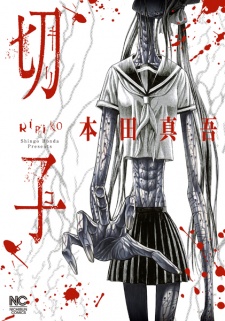
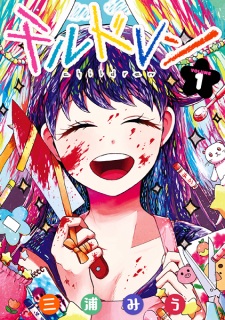
Also about the first chapter, if you're familiar with modern manga about vengeance, you may also see series like Pumpkin Night or Juujika no Rokunin. I'll be frank, both of those manga I mentioned are so bad that I feel like I genuinely made myself forget about them to not think about it too much... Now, I don't like pointless comparatives neither pointless mentions of other works, what I want you to think about and remember is how every one of those work start, I guess it is because of how a serialization works and the first chapter are all released, but is incredible how almost every manga of this type throws any buildup away and make the approach in just like 50 pages... Juujika no Rokunin and Pumpkin Night are specially atrocious in this aspect, both series having some of the most ridiculous, stupid and almost funny first chapter in a dark series ever... Now, Maria no Danzai took a more normal approach than what I would expect, I think the key point here was that the bullies in this manga weren't the one physically responsible from what they did. At the end of chapter one we see how all the bullies who blackmailed Kiritaka really look surprised to see he's dying, that unbelievable expressions when they really do notice the effects their abuse had, something neither Pumpkin Night nor Juujika no Rokunin had... So that's the point, not making the bullies the direct physical cause of the big disaster that always happen at the end of the first chapters of these manga, because then it doesn't seem so unbelievable like the other two examples... Yet, people are cruel, and... Kids are cruel, Jack... But letting that aside. Its always the disappointing reactions of those adolescent bullies in these type of manga which kills the premise and sells the series from first start, so I am glad this one had the decency to make it different; the bullies didn't REALLY wanted to kill him, and they didn't do it in a way that was physically neither with a super plan, its was pure sick blackmail. And by the way, those two panels in which Kiritaka falls and has his legs destroyed and is run over by a truck are so visceral to set as a milestone of the start of the cruel revenge of Maria, I liked it just by how purely explicit and grotesque it was. So besides my initial claims and problems, I really think this first chapter could have been way way worse, its just regular in the way in settles the symbols of Maria being a mother who represent... Well, Maria from the Bible, the way things develops also are somewhat lackluster, but we have seen infinitely worse, the whole thing at the end of the chapter about "I could tell my parents about it... But that could be worse" when his mother is so supportive and his father a private investigator is just... Goofy, you goofy goober. I am in no ways at all victim blaming Kiritaka for his end, more like it was a lackluster and poor way for the manga to tell us at the end "Oh he tried his best and he was just trapped", but we do so little on that, and we didn't look deeper onto that which results in a banal and almost accuser way of pointing dead ends without even trying to explain more... But you have to remember one name from here: Oyata... We will delve onto that later...
As every series that follows revenge as a core theme. Our main focus from chapter 2 onward is to see how Kiritaka's bullies have grown up, and how Maria's plan is approached purely by herself. This is pretty standard on revenge manga. As a time skip, it makes things more natural and gives us a look at the before and after of the people who did bad in the first chapter; since characters and their future deaths are the whole appeal of the manga, that thing boosting you to read. It makes us wonder how worse the antagonist group got as they grow older (again, this is typical in other manga like Pumpkin Night and Juujika no Rokunin). Again, it's more formulaic than anything; it isn't intrinsically bad, honestly, if you add the layer that the protagonist, Maria, wasn't the direct victim of bullying, going as deep as to even tell us how she divorced, had surgery and had to gain favors from the director to enter the school, her whole process of change to this point. Is basic, almost mundane stuff. I've read that it is even sexist by some users because of how Maria is depicted just in 3 chapters, using her body to gain advantages; personally, I don't mind, since it naturally opposes her characterization of a pure woman, almost like Mother Maria, which is the idea of this manga: being gruesome and showcasing low-life moments in people who do the minimum in their desperate attempts... But returning to our point, I just think it's so random how the plot points at the start are managed, getting into it:
-Kiritaka had a full set of videos of how the antagonists were bullying him. He doesn't do anything with this information because, as stated in that very same chapter, he doesn't want to make trouble for his mother nor for the other people around, again being overprotective of his mother. This is weird, since despite all that he said, he quite literally has the proof right there; plus, how did he even manage to do it? It just ends up being a cheap way for Maria to discover how her son was abused, an easy way out. Cheap and fast.
-Kiritaka's father, Taiichiro, is written as a distant man in the beginning, focusing too much on his job and a workaholic. After his son ends his life, he gets all remorseful and changes his whole mindset; that is a given, obviously he would react that way. My problems are: regardless of that, he still just brushed Maria's worries (his wife, btw) as nothing important; this is shown as something so normal that it contrasts heavily with his character in the future, being shown more as a plot device to depict how vacant their familiar life is instead of a character, and then when Kazuki-sensei wanted to use him later, it ended up being a weird mix in between a man going on purely by duty, a remorseful dad and abandoned man, and the cunning investigator who... To be honest, fails to do good in those three aspects, with conclusion coming out of nowhere, dialogue that makes us wonder "what was this guy doing the whole time?", in a chapter he directly tells his coworker "hey... Aren't you hiding anything about my son's death from me, right?" with a whole ass ominous panel, which is weird, why is he starting to have these doubts NOW? We are told that when they gave him permission to inspect the crime scene, everything was over, and that he was being accused of domestic violence out of pure nonsensical proofs? He IS an investigator, he WORKS in a police station… And no one doubted anything?
-Now, we are told that Kiritaka wrote a suicide note by obligation from his bullies and that his tweets were from one of his bullies too, okay... Well, remember point 1? He literally managed to FILM his bullies doing horrendous things to him and saved it in his PC... So why didn't he, noticing how hard things were going for him, make a subtle note or proof in his room that his bullies were forcing him to do horrendous things at the edge of quite literally ending his life? This is just contradictory; he was willing to film all the abuse, to document it… But not let any other piece of proof behind that his bullies were forcing him to write notes about suicide? Where do we draw the line, then?
-Now, maybe this is more of a nitpick... But why didn't Maria just fully change her name and surname? Yeah, she divorced and regained her previous surname, but it was precisely because she didn't change it that her ex-husband, Taiichiro, almost finds her and gets obsessed with the school in the first moment... It's like the point before; this feels weird. She divorced, underwent a surgery, but we draw the line at changing our names and surnames? It feels kinda... counterintuitive. It feels heavier since Taiichiro's motivations and role in the manga start with him investigating a case in the school where Maria is killing her son's bullies, but then gets hooked as he hears the nurse's name as Akeboshi Maria. Again, it feels kinda lazy and made up just to make Maria and her ex-husband relate in the story, but this can also be seen as the most nitpicking out of all these points.
We even have a short arc about a bomb attack at Maria's school; the premise and approach weren't really bad or boring, but I want to talk about two problems that can be summarized with the same conclusion: Chapter 33 and chapter 40-41. Both chapters present us with problematics that are answered and resolved without the reader even involving themselves to get amused by it, because it happens so fast and because it feels scripted, almost like a deus ex machina: the "chess play" in chapter 33 that is solved with just two go and forth between Okaya and Maria, and the whole bomb at chapter 41 in which Taiichiro comes and deactivates it out of nowhere, both happening so fast and out of the glue that it didn't even feel tense, because when we were reaching that point, it was already over. Plus, the chess play felt more like a convoluted analogy rather than a natural dispute between words using a third actor. The only thing good that came out of the bomb incident was that Ajiki's distrust in Okaya felt constructed and natural, not like he turned against him because of remorse or any weird thing. Distrust and inneficency is something that makes sense for a character like Ajiki and something that will have more buildup later, yeah, its nothing crazy, but credit is due to where it is deserved. Even if the whole was bad, we got something decent from it.
Now, those are all the thoughts I had in the very first moment I read the start of this manga; some crucial and minimal incongruences I feel like didn't sit well with me. But it's not only that. Shikimi and Kowase are killed immediately starting the manga, you know why? Because they need to maintain the plot, to make you remember this is about killing these people, that YOU are now reading this to see Maria killing these guys.The very reason for their being, to know why and how? It's actually irrelevant; they are a piece of shit, the bad guys in capital letters, not worth even showing more of them aside from their crimes... But are you okay with that? That's one core problem with series like these; they live up by the idea and concept of revenge, satisfaction, and gratification. But this also makes it forget their whole first purpose, the purpose of telling a story and being a product by itself. This manga feels that shameless in that aspect; it's like saying "terrorists are bad", "killing is bad", "watching or reading Tokyo Revengers is bad"... All are obvious things for the collective populace. Common sense. So we are going to use those same characters who did atrocities and make them suffer, to experience what they made others go through, sounds good? That's the conducting thread in these types of stories; is it my fault for not seeing the elephant in the room at the very very start? Maybe, but... We do know how they relate to each other; Maria tells us that Kowase and Shikimi were the first she killed because they were the most cowardly scum in that group... We know, because she tells us. Kinugawa is someone who really values his group of friends despite how annoying and shitty they are... How do we know? Well, the manga shows us... Kinda, because he says that they are friends, but Shikimi and Kowase are never shown being at the very least understanding with other members. Ajiki literally doesn't care about others, which makes those points of view more flawed. Now, is this bad? Not at all, Kinugawa may as well be just wrong on his perception of friendship, then... Ah, ¿sí, entendido? That's the point... Why is his point of friendship flawed? Despite Shikimi and Kowase being cowardly, despite Ajiki being indifferent to their whole group... Why does Shikimi love Oyaka? Why is Kowase a full perverted otaku? That's why this problem in the series ends up being almost circular, see? Okay, let me ignore the elephant in the room; I am not gonna point at it, but that bitchass elephant just threw water at my face and then crushed my legs; how am I supposed to ignore it? It was him who didn't ignore me, so? It was the manga itself that threw the problems right back at my face. In chapter 9 we even get to know that everyone else at the school and at the classroom knows about Nagare Kiritaka... And no one says nor does shit? Obviously, I am not expecting them to physically intervene... But they literally do nothing at all aside from comment "this is the same shit that happened to Nagare..." Yeah... Weird, huh? What could that possibly mean, you smartass? This has to be in common with the fact that this series tells us things when they ARE currently happening, and does nothing with it, and not just that, but doesn't change anything with it, you see the patron? Just as how the relationship as a group of the bullies works with things being told over as we go over the plot, making it feel weirdly empty, yes, I want to see Maria killing the antagonist group, because they are shit. "Oh, and what more?" Well... Yeah, that's all, the same feeling I had with this scene at chapter 9: So they know about Nagare, what do they think about it? "Well... shit's tragic" and that's all we got... Which makes the antagonist group fundamentally group to a core level that it fails to convey the aspect of "why are the demons, demons?" "Do those demons have names?" Hell nah, they are just bad because that's how they are born, zero introspection, we don't know their families, from where they carry their problems, or what made them form a group... Well, that is until...
At chapter 30 we strike a milestone, we find our gold and we end up at Valhalla. There is something that Okaya, the main antagonist, has that I don't like at all. You can depict horror in more ways than I could even care to count; terror and horror are something so impregnated in humans that I almost shit myself when I find a spider, just for the stupid little thing to end up sneaking into my room, now... I have to sleep without knowing where the spider is; was it a venomous spider? Is it still in my room? Am I going to be fucking killed by it? See, the unknown is the primal force of fear, so we made series like Monster, 20th Century Boys, Madoka Magika, Chainsaw Man even, where the unknown is portrayed by what we know the most: human and nature. Tying that kinda type of Lovecraftian while taking Thomas Hobbes' philosophy as a grown, why? Because we try to make other humans so different from our own that we don't recognize them. To make it simple and to shortcut it, if you have read those manga (sorry if you don't, this part may be a sluggish one), but: Is Makima human? Is Friend and Johan human? Is Madoka human? Making humans convey the horror of the unknown while making them have an almost omnipresent presence makes for an antagonist who, in most times, will be feared by the reader. Now add the idea that we are flawed beings as humans, born corrupt, without socioethical laws nor a regimen to control our life, without showcasing a biopolitical power over our very lives... So, that's what Okaya, the principal antagonist of this series, is, right? Well, yeah, he is exactly that guy, falling into the same archetype, archetype that I hate from the bottom of my heart.
Why? Because Okaya has everything planned, he is a reactive character both in actions and in emotions; he is characterized as a bad person exaggeratedly, he has pretentious dialogue that reflects his own "disturbed and abnormal" nature but without being clear to make it more "intellectual", is emotionless and indifferent to things happening around him, and his character just works to build the reality of the other character who, in this manga, doesn't live long, to be honest. When I mentioned those characters before, I never stated they were good characters either; it's just that you can throw all of them at the same way of thinking and working in the series (with just Madoka as the exception; she is the protagonist of her series). So, why do we have at the end with Okaya? See, at chapter 46 we see him at the beach surfing perfectly, and all the girls are oggling over him... Why was that necessary? To reaffirm his status as that perfect, charming entity? To show that he can take on anything he wants? Or it was just a silly scene? I don't know, because his character is flawed at that point, that when you see him taking part in the plot, you just think, "What do you want now?" Around chapters 32 to 35, we see how his family works, and it's just so, so stupid. Have you ever seen the typical thing about that person who was a devil since he was a child, almost as if born evil? This series tried to showcase it on the familiar aspect of the antagonist, and it was so silly that you can't even take it seriously; the only comment Okaya's mom has about her son's brutal and merciless activities is "he is our kid, we have to love him," and then she calls it a day... This scene, aside from exaggerating an aspect of an already exaggerated character, did nothing, then why? It was counterproductive; we can eat it up to a certain point before throwing up, you know? Antagonist like these are exactly the ones who kills all tensions on their respective manga, they do something? "Oh I had it already planned from the beggining" The protagonist do something? "Oh I already plannted that since the beggining" Okay? Me dropping the manga was on your plan? Well, whatever; Okaya is flat, boring, pretentious, the paneling does bad job just exagerating more of his qualities, the way he speaks and his dialogue is dumb, his characterization is dumb too... But, you know what? I have seen worse, some really really bad and to the level of atrocious, so despite Okaya having all those problems... He still feels like a human, despite being able to make his teacher commit suicide at like 12 years (which was so stupid that I can't even start), he is just on the edge of being a toxic snake that poisons all this work, that is for now.
Even at chapter 49. Okaya just knows that Ajiki is betraying him because... Well, he knows everything, you know? Thats all.
And, in chapter 51, he throws a bomb... That he had on his pockets... Well, the bomb was false, right? But to end a chapter in a cliffhanger so shameless like that, for it to end up in the very first pafe of the next character is a bait that hardily has any justification aside from just purely making tension aritificially.
By the way, in the chapter 46 se also see Taiichiro surfing, and when Maria asks him how is he so good, he answers with: "I practiced for my honey moon to make my wife happy" and Maria blushes thinking "He did all that... For me?!" This is a prime example of what I said before of how artificial this relationship feels, how weird is being contstruced and worked on and how in started developing purely in the incoherence of Maria not changing her surname and barely changing her name.
And chapter 32, in which Kinugawa dies, showing a full flashback, taking advantage of a cliffhanger with the excuse of "Okaya, that person... "Is the same as Maria" was really, really dishonest, making it for a construction of character for Okaya that, again, makes him feel even more dumb... But, at the same time, it makes Kinugawa be the only one of the antagonist group, the bullies, to have some sense of his attitudes and how he is, how he is and why he sees his group as friends... And you know what? I'll gladly take that over nothing; it was something simple and at the tightrope of falling into edgy territory, but it had enough sauce and thing for me to make it worth wasting 2 chapters in it. If at least Shikimi and Kowase had at least a little of that instead of characterization purely based on observations of other characters, then it would have been more passable, but you know what, Kinugawa? You were the most ruthless of the group, but at least Kazuki-sensei made you better than the rest of your group; even his dialogue seems more grounded and even human (to their standards) than what one would expect from a revenge manga.
To the point in which I am reading, chapter 54, that is, we're currently dealing with Ajiki, and surprisingly... That character added some fresh air to the plot. You see, I hate Okaya and his family for being stupid and a personification of purely evil in the most simple, plain, and straightforward way, without anything really interesting going on. I will make you do an exercise; can you imagine something evil and terrible? Well, Okaya did that, and his mom supports him for that; that's their whole relationship and purpose; it's simple, and after like 10 chapters you get bored out of it. So Ajiki, being a more rational and grounded character, managed to rectify the tone and direction of this little arc, more unique compared to the rest of the whole manga... For example, have you wondered how the fuck does Maria manage to find, do, and manipulate everything for her own good? I don't mean she isn't smart, but more like... No one saw her kidnapping Shikimi and Kowase? Where, when, and how did she find the things she used to kill them? When did she learn all the martial shit that she knows? She was the sweetest mom at the start of the series, just for her to go full Tai Lung when she needs to. Those things, problems as they may be, are quite irrelevant; again, why are you reading this manga if not just for the satisfaction of seeing annoying and cruel characters get killed? So that would be the whole point, the enemies' POV with their usual ruthless expressions and dialogues, then Maria and Taiichiro, like some sad, remorseful martyrs, then done. That's why Ajiki, being somewhat of a secondary antagonist, worked so well here; it was the first time the series was not formulaic without ending up doing whole lots of nothing as a result.
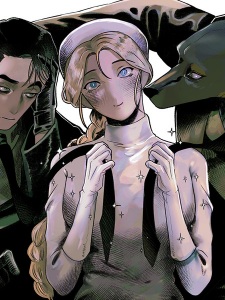
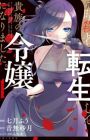
Now, I don't have much to say, and I am even afraid this will end up being just a mediocre pouring of my thoughts without really any conductor thread, yet I couldn't expect much from a series with the core theme of revenge and being as short as having barely 50 chapters. The core problems of this thematic are something I have grasped and almost fully comprehend this time, but still, we got something from this one, which is better than almost like 60% of the rest. Maria no Danzai has a great, absolutely gorgeous cover art; I love the covers that Kazuki-sensei thinks of and how the talented hand of Kamejima-sensei brings them to life. Great use of colors and a repetitive theme that makes it cohesive; even the art in the manga is pretty great too. Again, in grotesque scenes like when Kiritaka jumps and gets his legs brutally destroyed, it looks great. The paneling could be better, but it does not abuse close-ups or focus panels to achieve any shock or tension like others; it is moderate when it comes to anything except Okaya. I hate you, Okaya. But the manga feels like it tried making something out of a really lineal and formulaic premise, I appreciate the effort of the authors, as always, there is nothing to shame on people trying and failing, is just that the whole purpose and expression itself of this genre makes you feel tired of how its used, I don't like planting inherent problems to genres or topics, but manga like this one really have a hard time grounding themselves in the first chapters, you can condemn any manga or product by making bad first chapters, right, but with revenge you can directly just kill it at the start; the two examples I mentioned before did it; Juujika and Pumpkin, so a product that at least managed to approach it by a different angle and maanged to bring interesting things to the table is something I can even appreciate, sadly, its symbology is quickly forgotten, the characters are discarded to fast, and once things start spicing out, you realize the section is already ending... For such problems, I really can't recommend Maria no Danzai to people; maybe if you're a fan of the grotesque, of those brutal depictions of bullying in manga, you might find it appealing seeing how Mari just fucks these guys up mercilessly; just remember, you are reading this knowing what you're searching for. What you see is what you get; remember not to point out the elephant in the room once you start... And if you're lucky, that big ancient fucker will not look back at you like it did with me.
Thank you for reading.
Reviewer’s Rating: 3
What did you think of this review?
Nice
 0
0
Love it
 0
0
Funny
 0
0
Confusing
 0
0
Well-written
 0
0
Creative
 0
0Show all




.png)